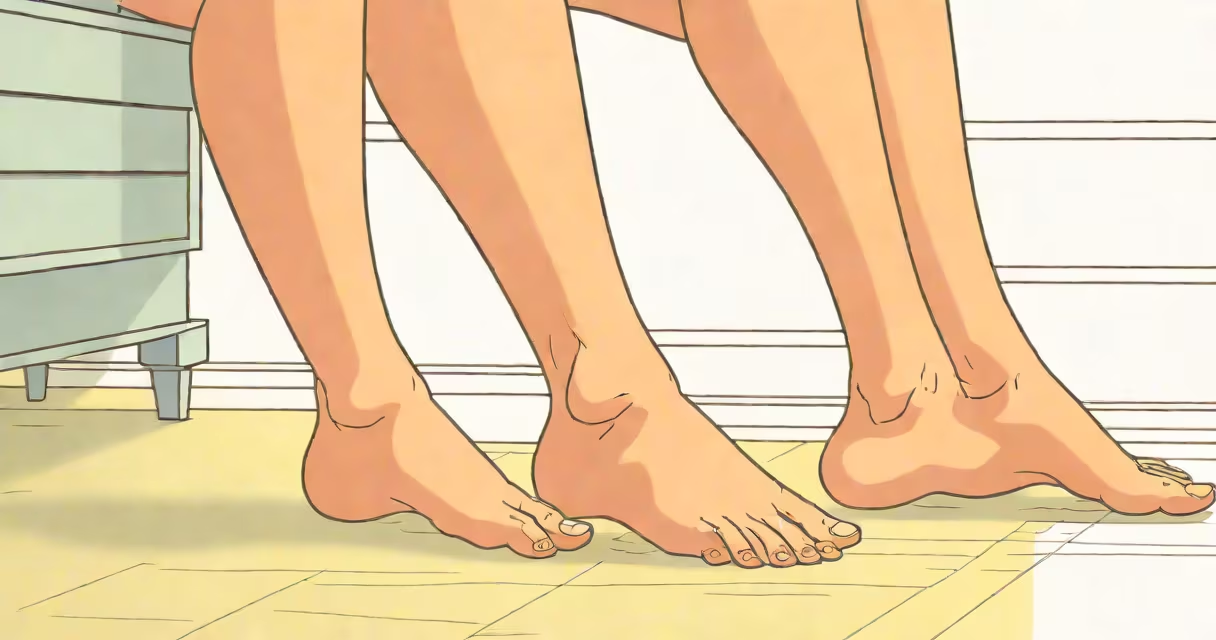
Swelling from the knee down indicates fluid accumulation in the tissues below the knee, often due to poor circulation, injury, or underlying medical conditions. This condition, known as peripheral edema, affects millions annually and can range from mild and temporary to a sign of serious health concerns.
Fluid builds up in the capillaries and leaks into surrounding tissue when pressure increases or when the lymphatic system cannot drain fluid efficiently. The lower legs bear most of the body's weight during standing, making them prone to pooling fluid. Swelling typically worsens after prolonged sitting or standing and improves with elevation.
Common triggers include prolonged immobility, high salt intake, hormonal changes, and medications such as calcium channel blockers. More serious causes include heart failure, kidney disease, liver cirrhosis, and deep vein thrombosis (DVT). A 2021 study in the Journal of the American Heart Association found that leg swelling was present in 36% of patients hospitalized with heart failure, highlighting its clinical significance.
When blood vessels dilate or become leaky, plasma seeps into interstitial spaces. Normally, the lymphatic system removes excess fluid. But when overwhelmed or damaged, fluid accumulates. The process begins with increased hydrostatic pressure in capillaries-often from gravity pulling blood downward during long periods of standing.
For example, a flight attendant who stands for eight hours daily may develop bilateral lower leg swelling by late afternoon. Elevating the legs above heart level for 30 minutes reduces swelling within hours. This demonstrates how mechanical pressure contributes to fluid buildup.
Chronic swelling can lead to skin changes-thickening, discoloration, and ulceration-especially in people with venous insufficiency. The American College of Phlebology reports that untreated chronic venous disease leads to leg ulcers in 10% of affected individuals over five years.
Swelling from the knee down falls into several categories based on origin:
| Type | Primary Cause | Key Features | When to Seek Care |
|---|---|---|---|
| Peripheral edema | Heart, kidney, or liver disease | Bilateral, pitting (indent remains after pressing), worsens with activity | Progressive swelling, shortness of breath, fatigue |
| Post-traumatic | Injury, sprain, strain | Localized, redness, warmth, pain | Pain increases, swelling doesn't improve in 48 hours |
| Medication-induced | Calcium channel blockers, NSAIDs, steroids | Gradual onset, symmetric, often starts in feet | Occurs after starting new medication |
| Deep vein thrombosis (DVT) | Blood clot in leg veins | Unilateral, painful, warm, swollen calf | Sudden onset, risk of pulmonary embolism |
One non-obvious distinction: swelling from DVT is typically unilateral and painful, while heart-related edema is usually symmetrical and painless. Misdiagnosing DVT as benign fluid retention can delay life-saving treatment.
A 2020 review in the New England Journal of Medicine emphasized that unilateral leg swelling with tenderness should prompt immediate imaging to rule out DVT. The risk of fatal pulmonary embolism rises sharply if clots go undetected.
Many assume swelling is harmless or simply "water retention." But persistent swelling from the knee down signals a physiological imbalance. Some confuse it with normal pregnancy-related swelling, but pregnant women typically see swelling in both legs and feet, not isolated below the knee.
Another misconception: that swelling only happens in older adults. In reality, young adults with sedentary jobs report similar symptoms. A 2022 survey by the National Institutes of Health found that 28% of office workers aged 25-40 experienced lower leg swelling after 6+ hours of desk work.
I once observed a patient with no history of heart disease whose legs swelled after a long road trip. He dismissed it as fatigue. Only after developing shortness of breath did he seek care-and was diagnosed with a small pulmonary embolism. His leg swelling was the first symptom.
If swelling persists beyond 48 hours, worsens, or is accompanied by pain, redness, or breathing difficulty, consult a healthcare provider. Initial evaluation includes checking for pitting (pressing the skin leaves a dent), assessing symmetry, and reviewing medications.
Simple measures reduce mild swelling: elevating legs above heart level for 30 minutes twice daily, reducing salt intake, and wearing compression stockings. The American Heart Association recommends 15-30 mmHg compression for mild edema.
For suspected DVT, ultrasound imaging confirms diagnosis. Treatment involves anticoagulants like rivaroxaban. For heart-related causes, diuretics may be prescribed under supervision.
Swelling from the knee down is not a normal part of aging or lifestyle. It reflects a breakdown in fluid regulation. Identifying the cause early prevents complications like skin breakdown, infection, or worsening heart function.