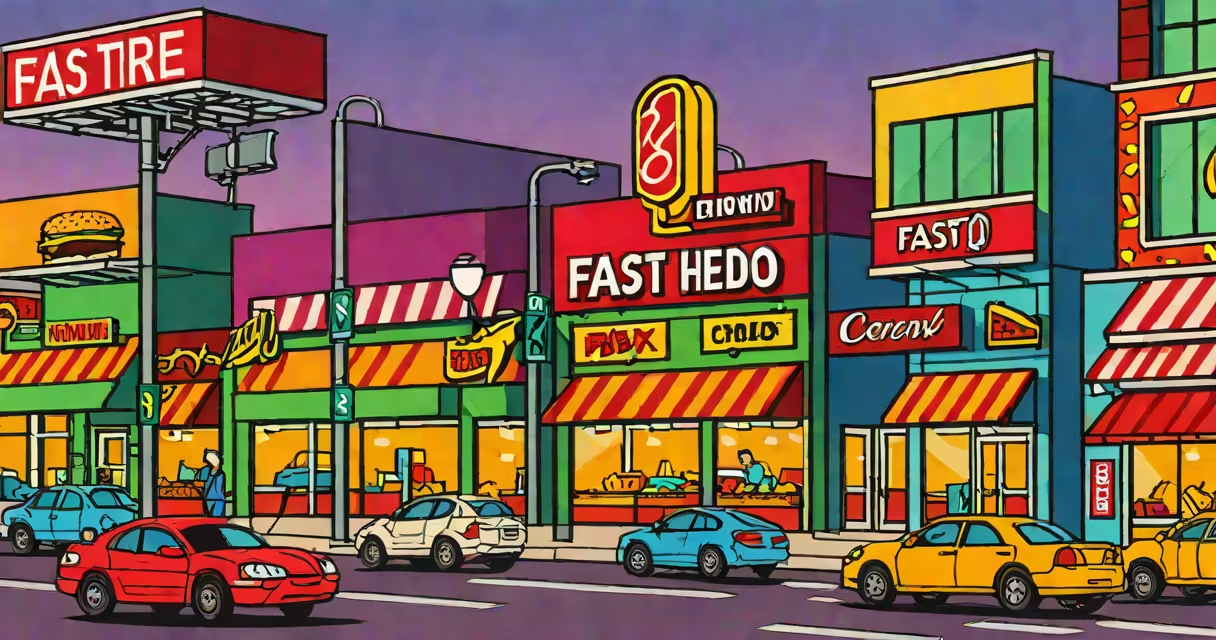
Near by fast food refers to restaurants offering prepared meals within a short walking or driving distance, typically serving burgers, fries, and drinks in under 15 minutes. These outlets prioritize speed, convenience, and consistent branding across locations.
These establishments operate on standardized menus and kitchen workflows. Orders are processed through digital kiosks, mobile apps, or counter staff, then assembled quickly using prepped ingredients. Most have drive-thru lanes, indoor seating, or pickup counters designed for rapid throughput. A single restaurant may serve 200-300 customers during peak lunch hours.
Major chains like McDonald's, Taco Bell, and Chick-fil-A dominate this space. They use centralized supply chains and regional distribution centers to ensure ingredient consistency. For example, McDonald's uses a "McDelivery" app that shows real-time order status and estimated arrival times based on kitchen load and traffic conditions.
When you search "near by fast food," your device sends your GPS coordinates to a mapping service. That service queries a database of registered restaurant locations, filtering results by proximity-usually within 1 to 3 miles. The system ranks options by distance, average wait time, and customer ratings.
Each location maintains a live order queue. Once you place an order via app or kiosk, the kitchen receives the request instantly. Staff use digital order boards to track preparation stages. A standard burger takes 4-6 minutes from order to pickup, depending on volume.
For delivery, the app assigns a rider based on their current location and route efficiency. Riders typically arrive within 20-30 minutes, though actual delivery time varies by traffic, weather, and restaurant staffing levels. A 2023 study by the National Restaurant Association found that 68% of fast food orders placed between 11:30 AM and 1:30 PM were delivered within 30 minutes.
Fast food venues differ by format, menu focus, and service model. The most common types include:
| Type | Service Model | Example Chains | Typical Wait Time |
|---|---|---|---|
| Drive-thru | Car-based ordering and pickup | McDonald's, Wendy's | 5-10 minutes |
| Walk-up kiosk | Counter or digital terminal pickup | Taco Bell, Panera Bread | 6-12 minutes |
| Delivery-only | App-based orders fulfilled by third-party riders | Domino's, DoorDash-affiliated locations | 25-45 minutes |
| Hybrid | Combines dine-in, drive-thru, and delivery | Chick-fil-A, Burger King | 8-15 minutes |
Some locations specialize in niche offerings. For instance, Five Guys focuses exclusively on customizable burgers and hand-cut fries. Their kitchens use fresh ingredients, but prep time remains under 10 minutes due to limited menu size and high-volume grilling stations.
Many assume all near by fast food is unhealthy. While many items exceed daily sodium limits-McDonald's Big Mac contains 970 mg of sodium-some chains now offer nutrition data on their websites. The USDA reports that 42% of major fast food chains now list calorie counts on menus, a requirement under the U.S. FDA's Nutrition Labeling and Education Act.
Another misconception is that drive-thrus are slower than walk-up counters. Data from the National Traffic Safety Council shows drive-thru average wait times dropped from 12.4 minutes in 2019 to 9.1 minutes in 2023, thanks to automated order systems and optimized lane layouts.
A lesser-known fact: some near by fast food locations use AI-powered demand forecasting. McDonald's employs a system called "Changing Menu Optimization" that adjusts menu availability based on local weather, time of day, and foot traffic patterns. On rainy afternoons, hot beverages and sandwiches appear more frequently on digital menus.
At 12:15 PM on a weekday, a person in downtown Chicago opens the McDonald's app. The app detects their location and displays five nearby locations within 1.5 miles. The closest-located at State Street and Madison-shows a 7-minute wait time and a 22-minute delivery estimate.
The user selects a McChicken sandwich ($4.99), medium fries ($2.29), and a medium Coke ($1.79). Total: $9.07. The app confirms the order and routes it to the kitchen. Within 4 minutes, the kitchen completes the order. A DoorDash rider picks it up at 12:22 PM and arrives at the user's address at 12:45 PM.
Delivery was delayed by 10 minutes due to a blocked intersection. The rider used a real-time navigation app that rerouted around the congestion. This illustrates how near by fast food relies on both physical infrastructure and digital coordination.
When searching for fast food near you, remember that proximity doesn't guarantee speed. A location 0.5 miles away may take longer than one 1.2 miles distant if it's understaffed or has outdated equipment. Always check real-time wait times and delivery estimates before placing an order.
Understanding how near by fast food operates reveals that speed and convenience aren't accidental-they result from coordinated logistics, real-time data, and standardized processes. The next time you search for a quick meal, consider not just distance, but the full chain of operations behind the order.