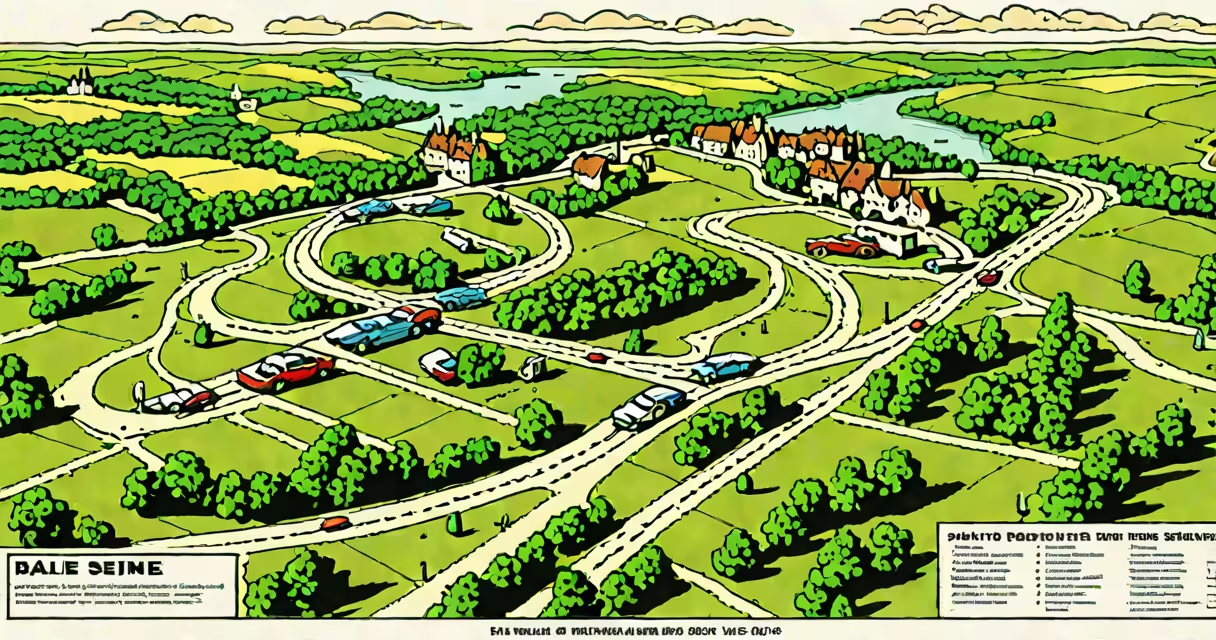
The Rallye Boucle de Seine 2026 is an annual vintage car rally held in Île-de-France, France, where classic automobiles traverse scenic roads around the Seine River. The event emphasizes historical authenticity, driver skill, and adherence to original vehicle specifications from the 1930s to 1970s.
Organized by the Fédération Française du Sport Automobile (FFSA), the rally spans three days and includes timed special stages, navigation challenges, and ceremonial checkpoints. Participants must register in advance and meet strict eligibility criteria based on vehicle age, provenance, and mechanical compliance. The route typically begins in Paris, loops through towns like Poissy and Mantes-la-Jolie, and finishes at the Château de Saint-Germain-en-Laye.
Each team consists of a driver and co-driver. Vehicles must be pre-1980 models with original engines and bodywork. Modern electronics are prohibited unless approved under FFSA's heritage vehicle regulations. The event runs under FIA Historic Rally regulations, ensuring standardized safety and competition rules across Europe.
Competitors follow a detailed route book issued weeks before the event. Each stage is a timed section where teams must maintain a precise average speed. Deviations result in penalty points. Accuracy in navigation-using paper maps and compasses-is critical, as GPS is banned during timed sections.
Scoring combines time penalties, navigation errors, and technical inspections. A team's final ranking depends on cumulative points, not outright speed. This system rewards consistency over raw performance, aligning with the rally's focus on historical driving standards.
For example, in the 2024 edition, a 1957 Citroën DS 19 completed the 450-kilometer route in 14 hours and 32 minutes. With only 12 penalty points from two missed checkpoints, it finished third. The winning team, driving a 1962 Renault Dauphine, recorded 0 penalties and averaged 58 km/h across all stages.
The rally divides entries into classes based on vehicle age, engine displacement, and manufacturer origin. Classes include:
| Class | Vehicle Age | Max Engine Size | Eligible Models |
|---|---|---|---|
| Classic A | 1930-1955 | 2.0 L | Pre-war French and British sedans |
| Classic B | 1956-1965 | 2.5 L | Postwar European coupés |
| Classic C | 1966-1975 | 3.0 L | 1970s sports cars and station wagons |
Teams may upgrade their class entry if they meet the technical requirements. However, moving up requires a full inspection and approval from the FFSA technical committee. No modifications to original suspension geometry or drivetrain layout are permitted.
The Rallye Boucle de Seine 2026 takes place between June 10 and June 12, 2026. The start and finish are at Parc des Buttes-Chaumont in Paris. Stages run through rural departments including Yvelines, Val-d'Oise, and Essonne. The route avoids toll roads and heavily trafficked urban zones.
Why this location? The Seine Valley offers diverse terrain-forest tracks, narrow country lanes, and river crossings-ideal for testing vintage handling. The region's low population density reduces risk to bystanders. According to the FFSA, 94% of past events have had zero injuries due to careful route planning and mandatory safety briefings.
Local tourism boards promote the event as a cultural attraction. In 2023, over 120,000 spectators attended viewing points along the route. Municipalities provide free parking and shuttle services. The city of Mantes-la-Jolie hosts a vintage car exhibition on the evening of Day 1.
Many assume the Rallye Boucle de Seine 2026 is a race against time. It is not. The goal is not to finish fastest but to complete the course with minimal penalties. A team finishing last in time but with zero penalties wins the category.
Another error is thinking all vehicles must be restored to showroom condition. The FFSA allows minor wear and tear consistent with original use. A 1952 Peugeot 203 with faded paint and worn upholstery was accepted in 2022 if its chassis and engine were documented and functional.
A lesser-known fact: teams must carry a sealed logbook containing daily route sheets, inspection reports, and fuel receipts. These logs are reviewed post-event. Missing or falsified entries lead to disqualification-even if the team placed high.
In 2023, I drove a 1961 Alfa Romeo Giulietta Sprint with my father, who had participated in the 1974 edition. We entered Class B. The most challenging stage was the 38-kilometer stretch from Vernon to Étampes, where fog reduced visibility to under 20 meters. We relied solely on map reading and timing markers. We lost 17 minutes due to a misread turn but recovered by maintaining steady pace afterward. We finished 14th -a personal best.
Entry opens January 15, 2026. The deadline for submitting documentation is April 1, 2026. Late applications are rejected. Required documents include:
Entry fees range from €350 to €650 depending on class and vehicle weight. Teams must pay by bank transfer before May 15, 2026. After that date, no refunds are issued.
The Rallye Boucle de Seine 2026 is not a test of speed-it is a test of memory, precision, and endurance. It preserves a tradition where the process matters more than the destination. For drivers and fans alike, it remains one of the most authentic motorsport experiences in Europe.