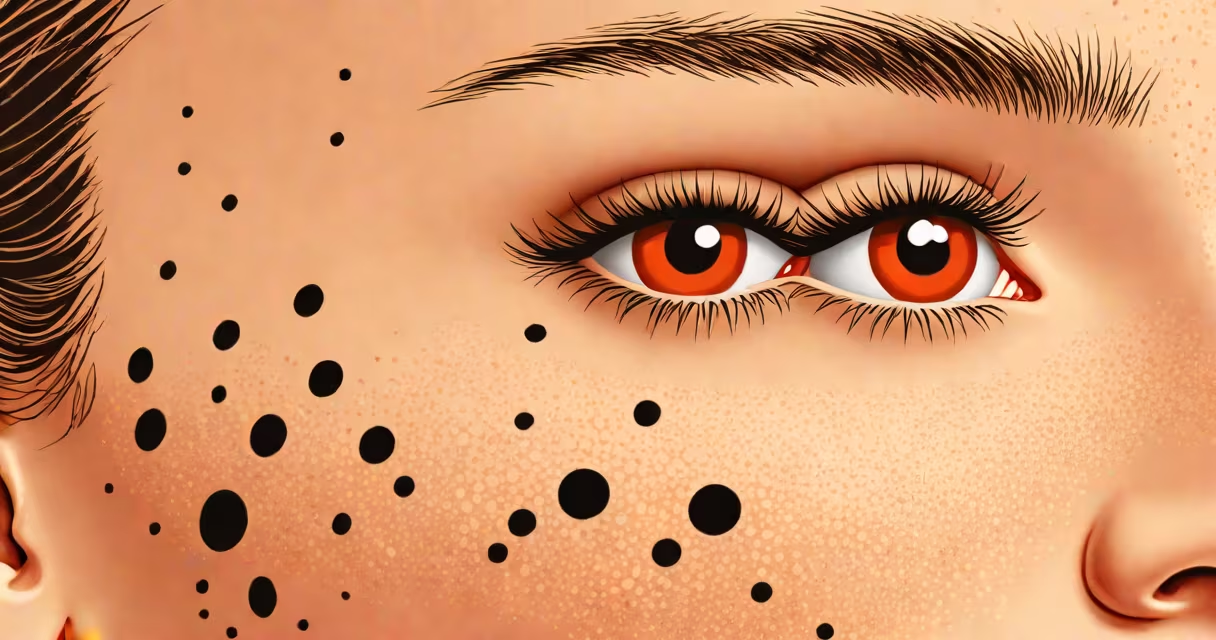
Topmarks ladybird spots are small, round, dark pigmented lesions commonly found on sun-exposed areas like the face, neck, and hands. They resemble the spots on a ladybug-hence the nickname-and are typically benign, though they may signal underlying skin changes.
These marks form due to localized overproduction of melanin, the pigment responsible for skin color. Melanocytes-the cells that produce melanin-become hyperactive in certain areas, leading to clusters of pigment that appear as discrete, well-defined spots. Most are flat and range from 1 to 5 millimeters in diameter, with a uniform color ranging from light brown to dark chestnut.
Topmarks ladybird spots are most common in adults over 30, especially those with fair skin who have had significant sun exposure. They are not contagious, not cancerous, and do not spread. However, they can increase in number or darken with continued UV exposure, making sun protection essential.
They develop when melanocytes produce excess melanin in response to triggers such as ultraviolet radiation, hormonal fluctuations, or inflammation. Sun damage is the primary driver-UV rays stimulate melanin production as a protective mechanism, but over time, this can lead to uneven distribution and visible spots.
Unlike freckles, which fade in winter and darken in summer, ladybird spots tend to persist year-round. They also differ from moles, which are usually raised and can change in shape or size. Ladybird spots remain flat and stable unless provoked by prolonged sun exposure or skin trauma.
A 2021 study published in the Journal of the American Academy of Dermatology found that 68% of individuals aged 40-65 with chronic sun exposure showed at least one such spot on the face. This supports the role of cumulative UV exposure as a key factor in development.
While all topmarks ladybird spots share the same core characteristics, variations exist based on location and pigmentation depth:
| Type | Appearance | Common Location | Typical Cause |
|---|---|---|---|
| Epidermal | Light to medium brown, flat, sharply defined edges | Face, shoulders, arms | UV exposure, aging |
| Dermal | Darker brown to black, slightly raised, less uniform | Neck, décolletage | Long-term sun damage, hormonal shifts |
| Post-inflammatory | Darkened patches following acne or injury | Forehead, cheeks | Healing process, inflammation |
Epidermal spots are the most common and easiest to treat. Dermal spots are deeper and more resistant to topical treatments. Post-inflammatory variants often resolve slowly and may require professional intervention.
Topmarks ladybird spots primarily occur on areas frequently exposed to sunlight-forehead, nose, cheeks, upper lip, and back of the hands. The neck and upper chest are also common sites, particularly in people who wear collared shirts or swimwear that leaves the upper torso uncovered.
They are not linked to diet, hygiene, or internal illness. However, hormonal changes during pregnancy or menopause can trigger or worsen their appearance. A 2019 review in *Dermatologic Clinics* noted that women using oral contraceptives were 2.3 times more likely to develop solar lentigines (a medical term for these spots) than non-users.
One non-obvious fact: these spots do not indicate skin cancer. According to the American Academy of Dermatology Association (AAD), solar lentigines are not precancerous. But they are a sign of photoaging-sun-damaged skin-and serve as a visual indicator of past UV exposure that increases long-term skin cancer risk.
Many people assume topmarks ladybird spots are signs of poor hygiene or internal imbalance. This is incorrect. They are not caused by toxins, stress, or digestive issues. They are purely a result of melanin concentration in the epidermis.
Another frequent error is confusing them with melasma-a condition that causes larger, patchy brown discoloration often triggered by hormones. Melasma appears symmetrically on the forehead, cheeks, and upper lip, while ladybird spots are isolated, round, and asymmetrical.
I once observed a patient who believed her spots were due to "bad blood." She avoided sun but continued to use a harsh exfoliant. After stopping the product and applying sunscreen consistently, the spots faded slightly over six months. This illustrates that treatment success depends on addressing the root cause-not myths.
Although most topmarks ladybird spots are harmless, see a dermatologist if a spot changes in color, grows rapidly, bleeds, or develops irregular borders. These changes may signal melanoma or other skin cancers.
The AAD recommends the ABCDE rule for identifying concerning moles: Asymmetry, Border irregularity, Color variation, Diameter over 6 mm, Evolving shape or size. While ladybird spots are rarely large or asymmetric, any new or changing mark warrants evaluation.
Topmarks ladybird spots are flat, round, pigmented marks caused by increased melanin production due to sun exposure and aging. They are not harmful but indicate prior UV damage. Treatment options include sunscreen, topical lightening agents, and laser therapy. Always monitor for changes in size, shape, or color. If in doubt, consult a dermatologist.