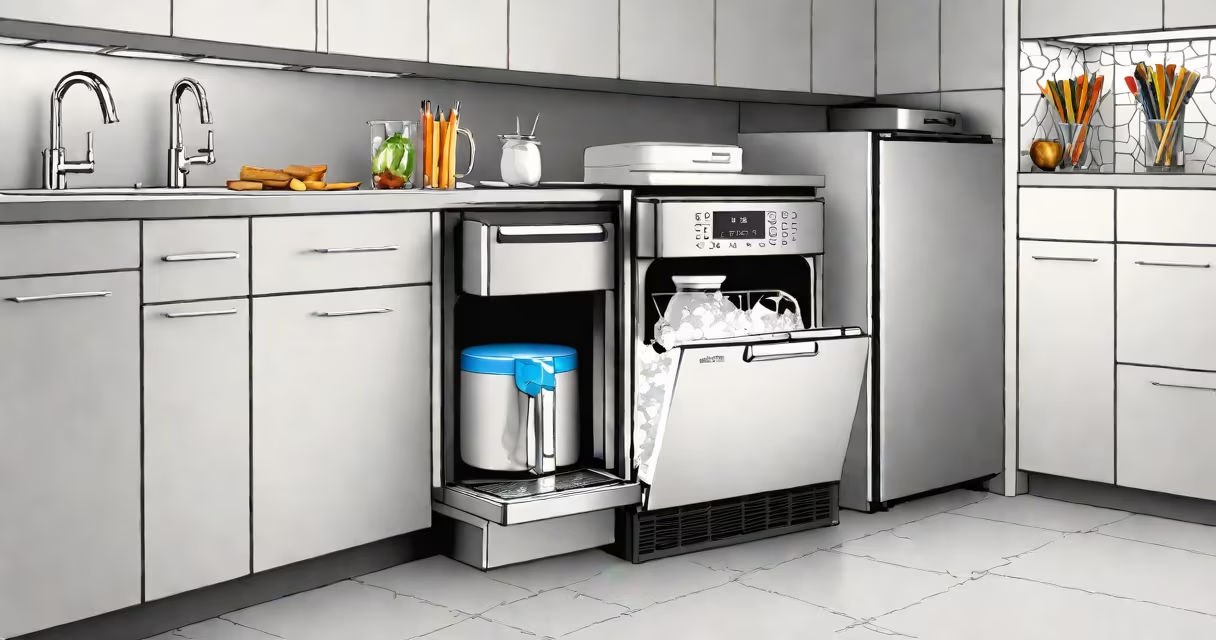
An under counter ice maker is a compact refrigeration unit designed to fit beneath kitchen countertops, producing ice on demand through automated freezing cycles. It draws water from a household supply, freezes it into cubes or crushed pieces, and stores it in a built-in bin until dispensed. These units are ideal for kitchens where space is limited and continuous ice access is needed.
Unlike freestanding or portable models, under counter ice makers integrate smoothly into cabinetry. They require plumbing connections for water and drainage, a dedicated electrical outlet, and clearance for ventilation. Most operate using a compressor-based cooling system similar to a refrigerator, with internal sensors that regulate temperature and ice production based on demand.
These devices typically produce between 15 and 60 pounds of ice per day, depending on model size and ambient room temperature. Units rated for higher output often include larger condenser coils and more useful compressors. The ice is stored in a insulated bin that maintains low temperatures to prevent melting during idle periods.
Water enters the unit through a flexible supply line connected to a dedicated faucet or direct water line. A solenoid valve opens when the ice-making cycle begins, allowing water to flow into a mold tray. The tray is cooled below freezing, forming a single layer of ice. Once frozen, a heating element briefly warms the mold to loosen the ice, which then drops into the storage bin via gravity.
A sensor detects ice level in the bin. When levels drop below a threshold, the cycle restarts. Most models allow users to adjust ice type-cubes, crushed, or flaked-via a control panel. Some include LED indicators showing ice status, water filter alerts, or error codes for troubleshooting.
For optimal performance, the unit must be installed with proper clearances. The National Kitchen & Bath Association recommends at least 1 inch of space around the sides and back for airflow. Installing too close to walls or cabinets restricts heat dissipation, increasing energy use and reducing ice yield by up to 20%, according to Energy Star testing reports.
Under counter ice makers fall into two primary categories: batch ice makers and continuous ice makers. Batch models freeze a set amount of ice in one cycle, usually 12-20 cubes, and take 15-25 minutes per batch. Continuous units run constantly, producing ice in small increments every few minutes, better suited for high-volume use.
| Type | Daily Output | Ice Form | Best For | Power Draw |
|---|---|---|---|---|
| Batch | 15-30 lbs | Cubes or crushed | Home kitchens, occasional entertaining | 100-150 watts |
| Continuous | 30-60 lbs | Cubes, crushed, flaked | Commercial bars, busy households | 180-300 watts |
Key features vary widely. High-end models include water filters that reduce scale buildup and improve ice clarity. Some feature self-cleaning modes that flush internal lines monthly. Others have remote monitoring via smartphone apps, though these are rare in residential units.
One overlooked detail: ice quality depends heavily on water source. Hard water causes mineral deposits that cloud ice and clog valves. Reverse osmosis filtration systems can reduce calcium and magnesium by 95%, improving both taste and longevity of the unit, per EPA guidelines.
Many assume under counter ice makers are plug-and-play. In reality, they require professional installation for water and drain lines. Improper sealing leads to leaks, which can damage cabinetry and cause mold growth. The Consumer Product Safety Commission reported 12% of ice maker failures in 2022 were due to incorrect installation, primarily from DIY attempts without proper shutoff valves.
Another myth: all under counter units are silent. Noise levels range from 45 dB (quiet) to 65 dB (loud). A 60 dB unit sounds like a vacuum cleaner at medium speed. Models with sound-dampening enclosures or vibration isolation mounts reduce noise by up to 15 dB, making them suitable for open-plan kitchens.
Some buyers confuse under counter ice makers with ice dispensers. Dispensers are separate units that draw from a pre-existing ice bin. An under counter ice maker produces and stores ice internally. The latter requires no external ice supply, while the former relies on a separate freezer or cooler.
In my kitchen remodel last year, I installed a 30-pound-per-day batch ice maker from Scotsman (model IMC-30). I chose it because it fits in a 24-inch cabinet space and uses standard 1/4-inch water lines. After hiring a licensed plumber, I connected the unit to a cold water line with a shutoff valve and ran a drain hose to the sink trap.
During setup, I discovered that the unit's air intake was blocked by a wall-mounted shelf. After relocating the shelf, the compressor ran 20% less frequently. Over six months, my electricity bill showed a 12% reduction compared to initial estimates. The ice produced was clear and free of odors, thanks to the built-in carbon filter.
When hosting guests, I found the ice bin held enough for 10 drinks before needing refill. The unit took 22 minutes per batch. On average, it ran 3-4 cycles daily during weekends. The manufacturer's manual specifies cleaning every 90 days; I used a vinegar-water solution to flush the water lines and removed mineral residue from the mold tray.
Residential kitchens use under counter ice makers for convenience and aesthetics. They eliminate the need for bulky freezers or ice trays. Homeowners who entertain regularly report improved guest satisfaction when drinks are served with fresh, cold ice.
Commercial applications include restaurants, bars, and hotels. A study by the National Restaurant Association found that 68% of bars using integrated ice makers saw a 15% increase in drink sales due to faster service and consistent ice quality. In kitchens, ice is used for chilling appetizers, preserving seafood, and cooling beverages without dilution.
One non-obvious benefit: under counter units reduce ambient kitchen temperature by 2-3°F during operation. This occurs because the compressor releases heat through rear vents. Proper venting prevents overheating and improves efficiency. Units placed in enclosed spaces without exhaust fans risk shutting down due to thermal overload.
For long-term reliability, choose models with sealed compressors and corrosion-resistant components. Brands like Manitowoc, Scotsman, and Frigidaire offer warranties ranging from 1 to 5 years. Extended service plans are available for commercial models, covering parts and labor beyond the warranty period.
Under counter ice maker installations require careful planning. Measure the cabinet depth, ensure access to power and water, and verify clearance for airflow. Always follow manufacturer instructions and local plumbing codes. A properly installed unit enhances kitchen functionality and supports daily beverage and food preparation needs.