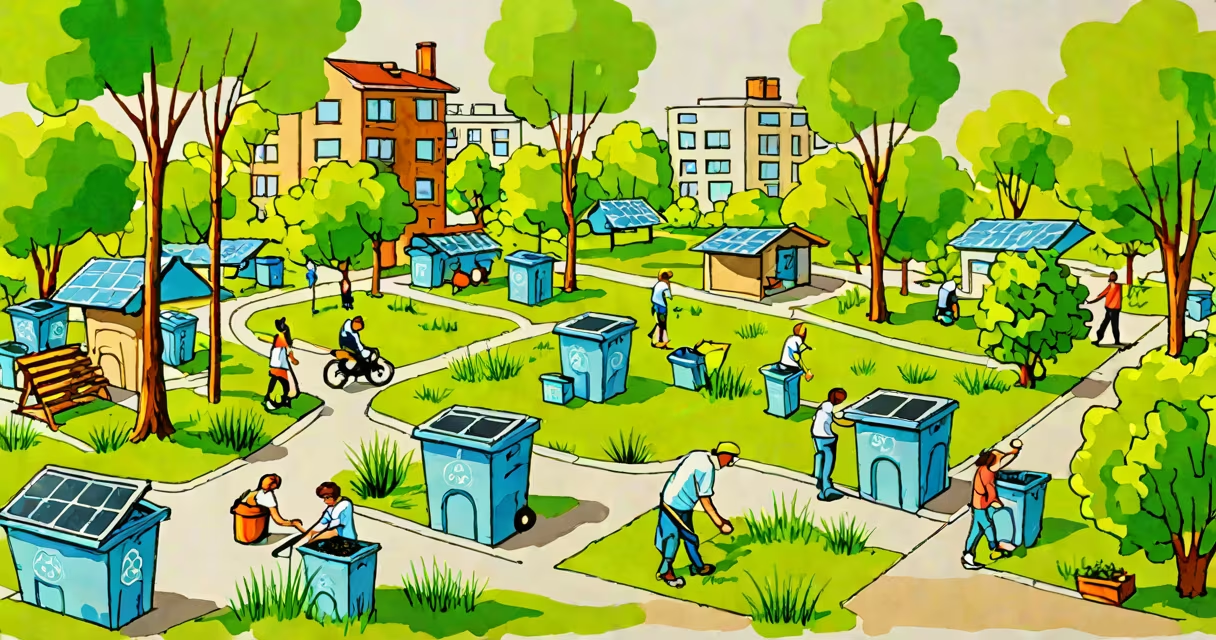
Preventing pollution involves reducing harmful substances released into air, water, and soil through responsible waste management, cleaner energy use, and sustainable land practices. These actions minimize environmental damage and protect human health.
Pollution stems from industrial processes, transportation, agriculture, and household waste. Preventing it requires targeting each source with specific strategies. For example, switching from fossil fuels to renewable energy reduces airborne particulates and greenhouse gases. Proper disposal of hazardous materials prevents groundwater contamination. Communities that adopt recycling programs cut landfill use by up to 60%, according to the Environmental Protection Agency (EPA).
Individual choices compound into large-scale change. Using public transit, composting food waste, and avoiding single-use plastics collectively lower carbon footprints. Cities like Copenhagen and Vancouver have reduced urban air pollution by 30% over ten years through integrated policies on green transport and building efficiency.
Major pollution sources include transportation, manufacturing, agriculture, and residential waste. Each contributes distinct pollutants: nitrogen oxides from vehicles, heavy metals from factories, pesticides from farms, and microplastics from homes.
Transportation accounts for nearly 29% of U.S. greenhouse gas emissions, primarily from gasoline-powered cars. Shifting to electric vehicles (EVs) and expanding public transit networks cuts emissions. A 2022 EPA report found that widespread EV adoption could reduce urban CO₂ levels by 15% within five years.
Industrial facilities release toxic chemicals into waterways and air. Regulations such as the Clean Air Act and Clean Water Act enforce emission limits. Factories using closed-loop water systems recycle 90% of their process water, drastically reducing discharge. The U.S. Department of Energy notes that industries adopting circular economy models cut waste by 40% on average.
There are four primary types: air, water, soil, and noise. Each requires tailored solutions based on pollutant behavior and exposure pathways.
| Type | Common Pollutants | Prevention Methods |
|---|---|---|
| Air | PM2.5, NOx, SO₂, VOCs | Transition to clean energy, vehicle emission controls, industrial scrubbers |
| Water | Nitrates, heavy metals, microplastics | Wastewater treatment, stormwater retention, reduced fertilizer use |
| Soil | Pesticides, petroleum residues, heavy metals | Phytoremediation, composting, restricted chemical application |
| Noise | Transportation, construction, industrial machinery | Sound barriers, zoning laws, quieter equipment standards |
Phytoremediation-using plants to absorb toxins from soil-is a low-cost method gaining traction. Sunflowers and mustard greens have successfully removed lead and cadmium from contaminated sites in former mining areas, as documented by the U.S. Geological Survey.
Many assume pollution prevention is solely a government responsibility. While policy plays a central role, individual and corporate actions drive measurable outcomes. For example, a 2021 study in *Environmental Science & Technology* showed that households reducing plastic use by 50% contributed to a 12% drop in ocean microplastic levels in coastal regions over three years.
Another misconception is that recycling alone solves waste pollution. Recycling rates in the U.S. hover around 32%, with only 9% of plastic ever recycled. True prevention lies in reducing consumption and designing products for reuse. Companies like Patagonia and IKEA now offer repair services and take-back programs, extending product lifespans and cutting waste at the source.
Some believe that small actions don't matter. But collective behavior shifts are useful. In 2020, a nationwide campaign in California encouraged residents to switch to reusable bags. Over 12 million were distributed, eliminating 1.4 billion single-use plastic bags annually-a reduction equivalent to removing 100,000 cars from roads for CO₂ savings.
In Portland, Oregon, city planners implemented a multi-pronged strategy to reduce local pollution. They began by replacing diesel buses with electric models, cutting bus-related emissions by 75%. Next, they introduced mandatory composting and recycling bins in all apartment buildings, increasing participation from 40% to 85% in two years.
They also launched a "Green Streets" initiative, installing bioswales-vegetated drainage channels-along major roads. These capture stormwater runoff, filtering out oil, sediment, and road salt before it enters rivers. Monitoring data from the Portland Bureau of Environmental Services shows a 60% decline in stormwater contaminants since 2018.
These changes reduced the city's annual pollution load by 28%, according to a 2023 report by the Oregon Department of Environmental Quality. The program cost $14 million over five years but saved $42 million in long-term cleanup and health care expenses.
When I visited Portland in 2022, I saw families sorting waste at curbside stations and children planting native shrubs in school gardens. The city's success wasn't due to one grand gesture-it came from consistent, localized action backed by clear data and public engagement.