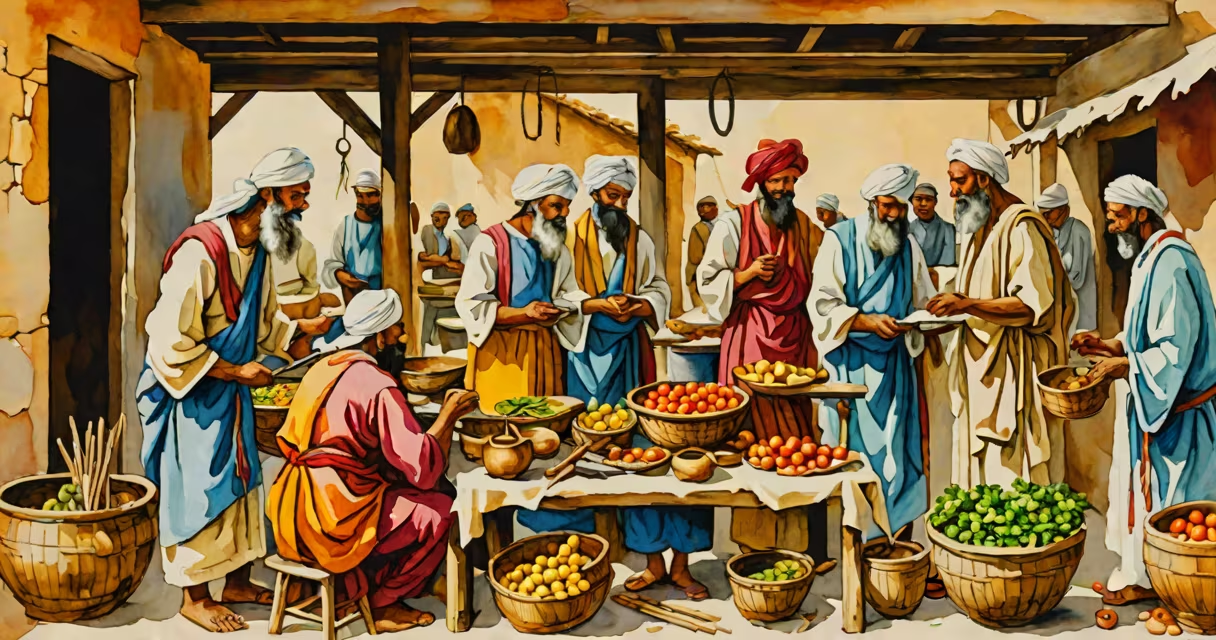
A barter exchange is a direct trade of goods or services between parties without using money as a medium of exchange. It relies on mutual agreement and perceived value, with no cash involved. This system predates formal currencies and remains in use today in informal economies and crisis situations.
Barter exchange functions when both parties have something the other wants. For example, a farmer who grows wheat might trade a bushel for a tailor's handmade coat. No dollars change hands-value is assessed through negotiation based on utility, scarcity, and need. This model underpins early human trade networks and persists in modern contexts like skill swaps, community exchanges, and emergency resource sharing.
According to the World Bank, barter systems were foundational in pre-monetary societies, with evidence from Mesopotamia around 3000 BCE showing clay tablets recording grain-for-tools trades. The International Monetary Fund notes that barter resurged during economic crises, such as Russia's 1990s hyperinflation, when people relied on goods instead of unstable currency.
For a barter exchange to succeed, both parties must agree on the value of what they're trading. Unlike monetary transactions, where prices are standardized, barter requires a mutual understanding of worth. This often leads to complex negotiations, especially when items differ in quality, durability, or desirability.
The process begins with identifying a need. A person with surplus apples might seek a tool repair service. They meet, assess each other's offerings, and negotiate an exchange. If both accept the deal, the trade completes. No receipts, no bank records-just a handshake and the transfer of goods.
Barter systems vary in structure and scale. The most common forms include:
| Type | Description | Example |
|---|---|---|
| Direct barter | Two individuals trade goods or services face-to-face. | Trades a bicycle for a painting. |
| Reciprocal barter | Parties agree to exchange goods over time, not immediately. | Farmer delivers weekly vegetables in exchange for a mechanic's monthly repairs. |
| Barter networks | Organized groups where members trade using a unit of account (not money). | Local business group uses "credits" to track value; 1 credit = 1 hour of service. |
Some communities run formal barter networks with internal ledgers. In the U.S., the National Association of Barter Exchanges (NABE) reports over 100 such groups exist, primarily serving small businesses. These networks assign values to services-like web design or legal advice-and allow members to earn and spend "trade credits."
One non-obvious fact: barter doesn't eliminate value assessment-it shifts it. Without money, parties must estimate worth through comparison. A 2016 study by the University of California, Berkeley, found that barter agreements often result in unequal outcomes because participants misjudge relative value. This imbalance can lead to resentment or breakdowns in trust.
People often confuse barter exchange with gift-giving or charity. But barter is transactional: both sides expect something in return. A donation of clothes to a shelter is not barter. Trading those same clothes for a meal at a community kitchen is.
Another error is assuming barter is primitive or inefficient. While it lacks the precision of price-setting in markets, barter enables trade when money fails. During the 2008 financial crisis, barter clubs in Detroit helped residents exchange skills and goods when unemployment exceeded 20%. The Federal Reserve documented that such systems reduced local dependency on external aid.
Barter also differs from modern marketplaces. Online platforms like eBay or Etsy use money as the standard unit. Even when users trade "for services," they still pay in dollars. True barter excludes money entirely. If you trade a pair of shoes for a haircut, no cash changes hands-only goods and labor.
In 2011, a group of fishermen in rural Indonesia began trading their catch directly for rice, tools, and medicine. With no access to banks or stable currency, they established a rotating trade schedule. On Mondays, fishers brought fresh catches to the village square. Villagers offered rice, seeds, or repaired nets in return. Over six months, this system supported 120 households.
Consider a modern example: a freelance graphic designer in Austin trades a logo design for a month of web hosting. The designer values the hosting at $100. The web host provider values the design at $120. Both agree on a fair exchange because the design improves their online presence. No invoices, no taxes reported-just a mutual benefit.
This scenario illustrates a core challenge: matching supply and demand. The designer needed hosting; the host needed branding. Their needs aligned. But if either party lacked a complementary good, the trade couldn't happen. This limitation explains why barter rarely scales beyond small communities.
I once observed a barter market in Nairobi, Kenya, where women traded handcrafted bags for school supplies. One woman exchanged five bags for two notebooks and a pencil case. The value wasn't equal in dollar terms-but it was balanced in need. That moment revealed the emotional and practical weight behind barter: it's not just economics, it's survival and dignity.
Barter exchange remains relevant in settings where traditional finance fails. During the 2020 pandemic, many small businesses in the U.S. formed barter groups to maintain operations. The Small Business Administration reported that 14% of affected firms used non-monetary trade to survive. In war zones like Ukraine, citizens barter fuel for food or medicine due to disrupted banking systems.
Even in developed economies, barter appears in niche sectors. Airlines sometimes exchange unused flight capacity with hotels for guest stays. Nonprofits use barter to swap services-e.g., a lawyer offers free legal advice in exchange for marketing help. These arrangements reduce costs and build resilience.
Understanding what is barter exchange reveals more than trade mechanics. It shows how humans adapt when systems break. It's not outdated-it's enduring. Whether in ancient Mesopotamia or a modern urban co-op, barter exchange reflects a fundamental truth: value is not fixed. It's negotiated, shared, and rebuilt every time two people agree to trade.