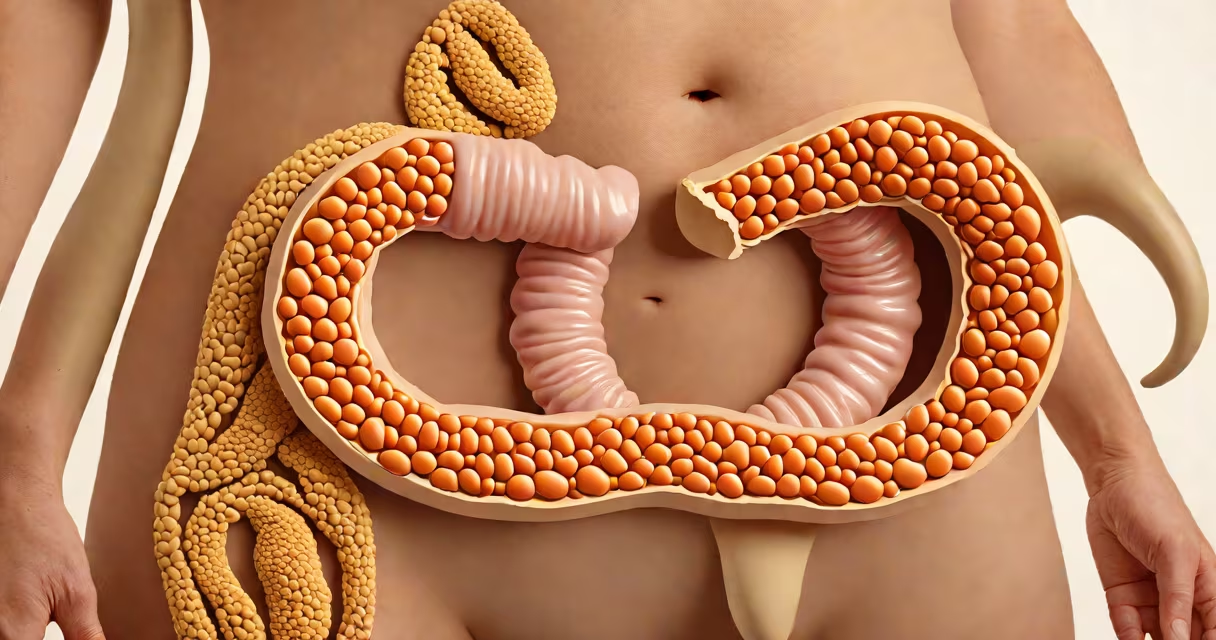
Colonic inertia is a condition characterized by severely slowed movement of stool through the large intestine due to weakened or absent muscular contractions in the colon wall. It leads to chronic constipation unresponsive to standard laxatives and often requires surgical intervention.
Unlike temporary constipation caused by diet or dehydration, colonic inertia results from intrinsic failure of the colon's neuromuscular system. The condition affects fewer than 1 in 10,000 people and typically presents in early adulthood, though diagnosis may be delayed for years due to overlapping symptoms with functional constipation.
Colonic inertia is diagnosed when imaging shows prolonged transit time through the colon and manometry confirms lack of coordinated contractions. It is distinct from irritable bowel syndrome (IBS) and functional constipation, which involve normal motility but altered sensation or pelvic floor function.
The colon moves waste through rhythmic contractions called peristalsis, driven by electrical signals from the enteric nervous system-the "gut brain." In colonic inertia, these signals fail to trigger effective muscle contractions, causing fecal material to stagnate.
Studies using wireless motility capsules show that patients with colonic inertia have mean colonic transit times exceeding 72 hours, compared to 24-48 hours in healthy individuals. This delay leads to excessive water absorption, hardening of stool, and increased risk of complications such as fecal impaction or megacolon.
A 2021 study published in *Gastroenterology* found that 68% of patients with colonic inertia had abnormal colonic manometry patterns, including absence of propagated contractions in the descending and sigmoid colon-key areas responsible for propelling waste toward the rectum.
Colonic inertia is classified into primary and secondary forms based on cause:
| Type | Prevalence | Common Causes | Key Distinction |
|---|---|---|---|
| Primary (idiopathic) | ~70% | Unknown origin; likely genetic or developmental | No identifiable disease; often diagnosed after ruling out other causes |
| Secondary | ~30% | Neurological disorders (e.g., Parkinson's, spinal cord injury), diabetes mellitus, connective tissue diseases | Linked to known systemic conditions affecting nerves or muscles |
Primary colonic inertia often begins in adolescence and progresses slowly. Secondary cases usually develop later and correlate with the progression of the underlying illness. For example, diabetic patients with autonomic neuropathy have a 20-30% higher risk of developing colonic inertia than the general population, according to the American Gastroenterological Association (AGA).
One non-obvious fact: colonic inertia is frequently misdiagnosed as IBS-C (constipation-predominant irritable bowel syndrome). Both share symptoms like bloating and infrequent bowel movements, but IBS-C involves normal transit time and heightened visceral sensitivity-not motor failure. Misdiagnosis delays appropriate treatment and increases patient distress.
Diagnosis relies on objective testing because symptoms alone are unreliable. The gold standard is a 72-hour radio-opaque marker study, where patients swallow 20 markers visible on X-ray. Fewer than 10 markers expelled after 72 hours indicate delayed transit.
Colon manometry measures pressure changes in the colon wall during contraction. In colonic inertia, recordings show low-amplitude, non-propagated contractions-indicating weak or disorganized motor activity. A 2019 consensus statement from the European Society of Neurogastroenterology and Motility (ESNM) recommends combining transit studies with manometry for accurate diagnosis.
Patients with colonic inertia often report passing fewer than three stools per week despite high fiber intake and daily laxative use. One patient I evaluated had a history of 15 years of worsening constipation, multiple failed trials of polyethylene glycol and senna, and a colonoscopy revealing massive fecal loading. Only after a transit study confirmed delayed passage did we diagnose colonic inertia.
Non-surgical options include dietary modification, biofeedback therapy, and medications like prucalopride-a serotonin agonist that stimulates colonic contractions. Prucalopride improves bowel movement frequency in 40-50% of responders, per a 2020 randomized controlled trial in *The Lancet Gastroenterology & Hepatology*.
For refractory cases, colectomy with ileorectal anastomosis-removal of the entire colon and connection of the small intestine directly to the rectum-is the most effective long-term solution. Success rates exceed 85% in restoring regular bowel function, according to data from the National Institutes of Health (NIH).
Surgery is reserved for patients who fail medical management and suffer significant quality-of-life impairment. Postoperative complications occur in ~10% of cases, including diarrhea and pouchitis, but most patients report marked improvement in daily functioning.
Consult a gastroenterologist if you experience persistent constipation lasting more than six months, especially with abdominal pain, bloating, or inability to pass stool despite lifestyle changes. Early evaluation prevents complications like bowel obstruction or toxic megacolon.
Colonic inertia remains under-recognized, partly because its symptoms mimic common digestive issues. Awareness among clinicians is improving, thanks to updated guidelines from the AGA and ESNM emphasizing diagnostic criteria and stepwise evaluation.
Understanding colonic inertia helps distinguish a rare, treatable disorder from functional constipation. Accurate diagnosis enables targeted therapy and prevents unnecessary suffering.