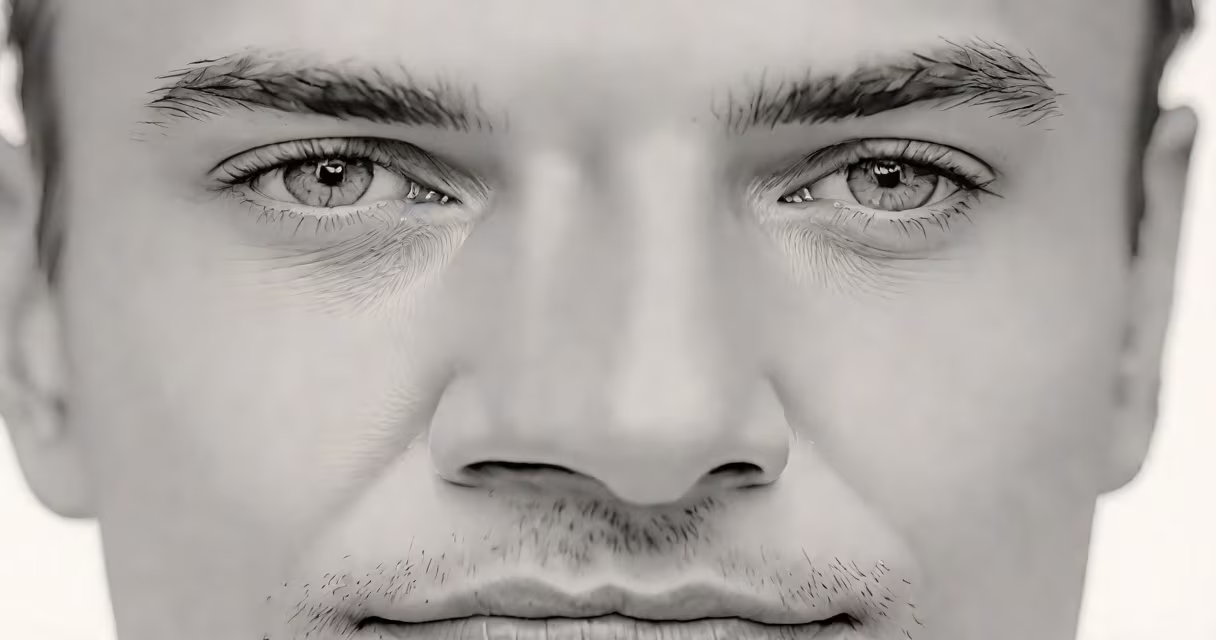
A deepfake is a synthetic media file-usually a video-created using artificial intelligence to replace a person's likeness in footage with someone else's, often without consent. These manipulations rely on machine learning models trained on thousands of images and video clips to generate realistic, deceptive content.
Deepfakes are not just fictional effects. They're real tools capable of altering audio, facial expressions, and body movements in ways that mimic authentic human behavior. The term combines "deep learning" and "fake," reflecting their technical foundation and deceptive nature.
According to the Stanford Internet Observatory, deepfakes have evolved from low-quality parodies to high-fidelity simulations indistinguishable from real footage under normal viewing conditions. The rise of accessible AI tools has made creation easier, while detection remains a growing challenge.
Creating a deepfake involves training a neural network on a dataset of video clips featuring the target individual. The model learns patterns in facial movements, speech rhythms, and lighting to generate a convincing replacement.
The process typically uses two types of generative adversarial networks (GANs): a generator that produces fake video frames and a discriminator that evaluates realism. Over many iterations, the generator improves until the output passes as authentic to both the algorithm and human viewers.
For example, a deepfake of a politician delivering a speech they never gave requires only 30 seconds of public footage to train the model. With minimal editing, the result can convincingly show the person saying controversial statements, even if no such recording exists.
Deepfakes fall into two broad categories: identity substitution and behavior modification. Identity substitution replaces one person's face with another's in existing video. Behavior modification alters facial expressions, lip movements, or gestures to change the perceived meaning of a clip.
| Type | Use Case | Example |
|---|---|---|
| Face Swap | Entertainment, parody | Actor's face swapped onto a movie scene from a different film |
| Audio Synthesis | Impersonation, fraud | AI-generated voice mimicking a CEO's tone to authorize a financial transfer |
| Full-Body Animation | Virtual influencers, advertising | Model's body animated to walk through a fashion show in a digital environment |
While some deepfakes serve entertainment purposes-like replacing a celebrity's face in a viral meme-others pose serious risks. In 2023, researchers at the University of California, Berkeley, documented cases where deepfakes were used in political disinformation campaigns during national elections.
One notable incident involved a fabricated video of a European leader appearing to endorse a controversial policy. The clip circulated widely on social media before being debunked. The platform removed it within 12 hours, but not before reaching over 2 million users.
Deepfakes appear in media, politics, finance, and personal relationships. Their accessibility has lowered barriers to entry, allowing individuals with basic tech skills to produce convincing fakes using free online tools.
Law enforcement agencies report increasing cases of deepfake scams involving impersonation. In one U.S. case, a company executive was tricked into wiring $243,000 after receiving a phone call from a voice that sounded exactly like his boss's. The audio was generated using a deepfake model trained on five minutes of recorded calls.
Not all deepfakes are malicious. Some filmmakers use them to restore damaged archival footage. In 2022, a documentary team reconstructed missing scenes from a 1960s interview using deepfake techniques to fill gaps caused by degradation. The project was approved by surviving family members and reviewed by historians.
However, the line between ethical use and abuse is thin. A 2023 study by the Partnership on AI found that 68% of deepfake content online falls into the category of non-consensual sexual imagery, primarily targeting women and minors.
Deepfakes are not the same as simple video edits like cropping, color grading, or adding subtitles. They involve AI-driven reconstruction of visual and auditory elements based on learned patterns, not manual adjustments.
They also differ from traditional special effects. While CGI in movies like *The Matrix* or *Avengers* relies on handcrafted animations and compositing, deepfakes use automated systems trained on vast datasets to simulate reality.
A common misconception is that deepfakes require high-end hardware. Modern tools like DeepFaceLab and FakeApp run on consumer-grade laptops with dedicated GPUs. You don't need a supercomputer-just access to a few hundred hours of training data.
I once tested a deepfake tool using a single YouTube video of a public figure speaking. After three hours of processing, the output matched the original's lighting, mouth movement, and eye blink timing so closely that even experienced editors struggled to spot the difference without side-by-side comparison.
Identifying deepfakes remains difficult. Most rely on subtle artifacts: unnatural blinking, inconsistent shadows, or mismatched audio-video sync. But advanced models now replicate these details with high accuracy.
Researchers at MIT developed a detection system called DeepFakeTwin that analyzes micro-expressions and temporal consistency in video frames. It achieved 94% accuracy on a dataset of 10,000 deepfake samples, according to a 2023 paper published in *Nature Machine Intelligence*.
Still, detection tools are reactive. By the time a method is released, newer deepfakes may already bypass it. The most effective defense is skepticism: verify sources, cross-check metadata, and avoid sharing unverified videos.
When in doubt, consult trusted platforms like the 10W30 what does it mean guide, which explains how to assess video authenticity using timestamp analysis, reverse image search, and platform-specific verification features.
Understanding what deepfake means isn't just about recognizing a technological trend-it's about protecting truth in a world where visuals can be manufactured. The ability to distinguish real from fake is now essential for informed participation in public discourse.