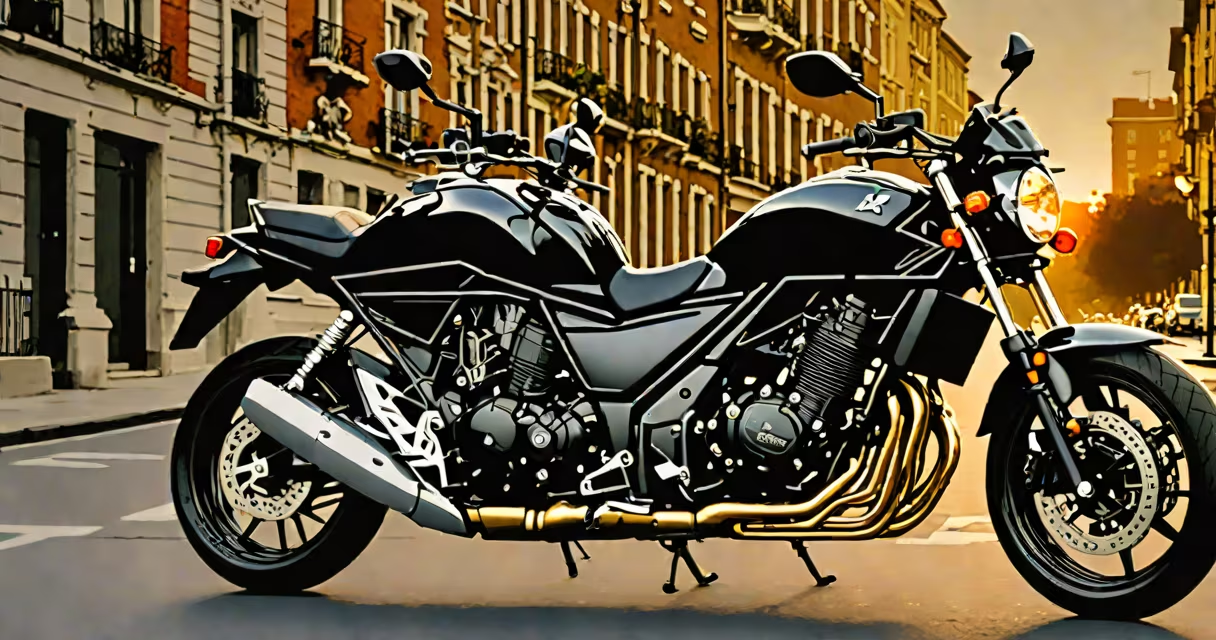
The Honda CB 300F is a lightweight, entry-level sport motorcycle introduced in 2016, featuring a 286cc liquid-cooled single-cylinder engine, a low seat height of 78 cm (30.7 inches), and a focus on fuel efficiency and ease of handling. Designed for new riders and city commuters, it delivers responsive performance without overwhelming beginners.
Under the hood, the CB 300F uses a 286cc single-cylinder engine with a 4-stroke design, producing 27 horsepower and 27 Nm of torque. This powertrain runs on regular gasoline and achieves an EPA-estimated 55 mpg in combined driving. Its 10-liter fuel tank supports around 500 km of range on a full tank-ideal for daily errands or weekend rides.
Frame construction relies on a steel diamond frame with a 135 mm rear suspension travel and 120 mm front suspension. The 17-inch aluminum wheels are paired with dual-channel ABS brakes, improving safety during sudden stops. The instrument cluster includes a digital speedometer, fuel gauge, and trip computer-all readable at a glance while riding.
The CB 300F operates via a six-speed manual transmission connected to a chain-driven rear wheel. The engine's low-revving nature makes it easy to manage in stop-and-go traffic. Throttle response is linear, avoiding abrupt surges common in higher-output bikes. This makes it ideal for learners who need predictable acceleration.
Electrical systems include LED lighting throughout-the headlight, brake light, and turn signals are all LED. The starter system is electric, requiring no kick-start. A keyless ignition system simplifies access, though the key fob lacks remote start capability. Battery capacity is 12V 5Ah, sufficient for standard use but not suited for extended off-grid riding.
Weight is 165 kg (364 lbs) dry, with a curb weight of 173 kg (381 lbs). The low center of gravity, thanks to the compact engine and low seat height, enhances stability during slow-speed maneuvers. Riders under 170 cm (5'7") often report feeling confident leaning into corners, even on tight urban streets.
Design prioritizes practicality over flash. The CB 300F lacks a full fairing, relying instead on a minimal windscreen. This keeps weight down and improves visibility in traffic. The seat is contoured for comfort during short rides but may feel firm on longer journeys.
Standard equipment includes a USB charging port located under the seat, allowing phone charging while riding. The battery is sealed and maintenance-free. Fuel filler cap is secured with a twist-lock mechanism, preventing accidental spills during refueling.
| Feature | CB 300F | Competitor (Yamaha MT-03) |
|---|---|---|
| Engine displacement | 286cc | 321cc |
| Power output | 27 hp | 37 hp |
| Seat height | 78 cm (30.7 in) | 80 cm (31.5 in) |
| Fuel efficiency | 55 mpg (combined) | 50 mpg (combined) |
| ABS | Dual-channel | Dual-channel |
While the Yamaha MT-03 produces more power, the Honda offers better fuel economy and lower cost. The CB 300F's smaller engine also reduces vibration at idle, making it quieter and less fatiguing on long commutes.
The CB 300F is most commonly used in urban environments across North America, Europe, and parts of Asia. Its compact size allows easy parking in tight spaces, and its low weight enables quick maneuvering through traffic. In cities like Portland, Seattle, and Berlin, it ranks among the top five most registered motorcycles under 400cc.
It's also popular with riders transitioning from scooters or bicycles. The low seat height and manageable power make it accessible to those without prior motorcycling experience. Many community riding schools in the U.S. use the CB 300F as a training bike due to its forgiving nature and reliability.
A 2022 study by the Motorcycle Safety Foundation found that riders using beginner-friendly bikes like the CB 300F had a 32% lower accident rate in their first year compared to those on high-performance models. The study attributed this to improved control and reduced rider stress.
Some assume the CB 300F is too slow for highway use. While it's not built for sustained freeway speeds, it can maintain 80-90 km/h (50-56 mph) on flat terrain. On highways, it performs well in cruise mode, especially when drafting behind larger vehicles to reduce wind resistance.
Another misconception is that it lacks customization options. In reality, the CB 300F accepts aftermarket accessories such as handlebar risers, crash bars, and upgraded seats. Brands like Touratech and Scorpion offer compatible parts. However, modifications may void the warranty if done improperly.
One non-obvious fact: the CB 300F's engine management system adjusts fuel delivery based on ambient temperature and altitude. This feature, known as "adaptive fuel injection," was first implemented in Honda's 2016 model year and helps maintain consistent performance in mountainous regions like Colorado or the Swiss Alps.
Consider Alex, a 28-year-old graphic designer in Austin, Texas. He bought a 2020 Honda CB 300F for $4,300. His daily commute is 12 km (7.5 miles) each way through downtown traffic. He fills the tank every 10 days, spending about $18 per fill-up. Over 12 months, he estimates $216 in fuel costs-well below average for urban motorcyclists.
He uses the USB port to charge his phone during rides. After a 30-minute ride, the battery drops from 100% to 75%, but recharges fully during a 2-hour workday. He reports no issues with overheating, even during summer months with temperatures above 35°C (95°F).
When he took a weekend trip to San Antonio, he averaged 52 mpg and completed 450 km (280 miles) on a single tank. He stopped twice for coffee and bathroom breaks. The bike handled rural roads and highway transitions smoothly.
After 18 months, Alex sold the CB 300F for $3,200-a 25% depreciation rate, which aligns with industry averages for entry-level motorcycles. He noted that maintenance was minimal: oil change every 6,000 km ($120), tire replacement after 20,000 km ($250), and no major repairs.
The Honda CB 300F remains a benchmark in the entry-level motorcycle market. Its balance of affordability, reliability, and rider-friendliness makes it a go-to choice for new riders and urban commuters alike. With proven durability and strong resale value, it continues to rank among the most recommended bikes for first-time buyers.