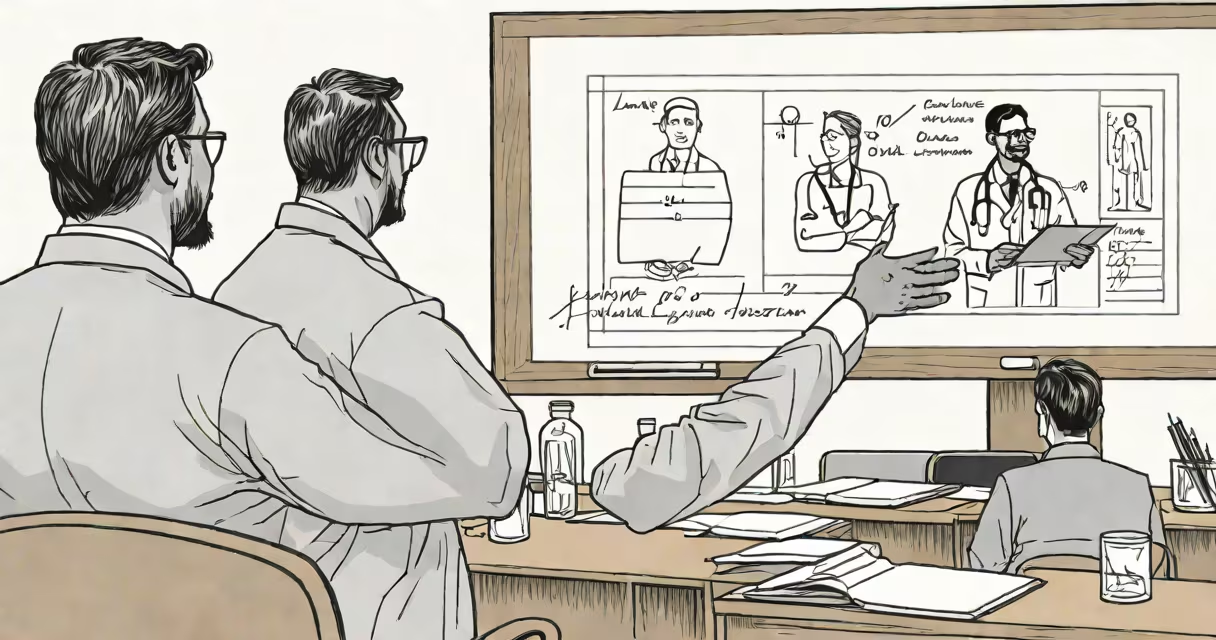
The ipotame lecture cp is a standardized clinical case presentation format used in medical education to teach diagnostic reasoning, differential diagnosis, and evidence-based management through structured, narrative-driven case summaries.
Developed within postgraduate medical training programs, particularly in internal medicine and emergency care, the ipotame lecture cp provides a consistent template for learners to analyze complex patient presentations. It emphasizes clinical logic, prioritization of findings, and integration of patient history, physical exam, and test results into a coherent diagnostic and therapeutic plan.
Each ipotame lecture cp follows a fixed sequence: Introduction, Presentation, Objective, Treatment, Assessment, Management, and Evaluation. This structure helps learners systematically address all critical elements of patient care, reducing cognitive load during high-pressure decision-making.
The ipotame lecture cp operates as a cognitive scaffold. It forces the presenter to move beyond memorizing facts and instead focus on synthesizing information under time constraints. Each component of the format serves a distinct purpose:
This format is used in simulation labs, bedside teaching rounds, and OSCE exams. For example, a resident presenting a case of septic shock due to pneumonia would begin with the patient's presentation of fever, hypotension, and altered mental status. They would then walk through the objective: "To recognize sepsis using Sepsis-3 criteria and initiate fluid resuscitation and vasopressors."
While the core structure remains consistent, the ipotame lecture cp adapts to different clinical domains. The following table outlines common variants:
| Type | Use Case | Example Focus |
|---|---|---|
| Emergency Medicine | Acute presentations | Stroke, myocardial infarction, trauma |
| Internal Medicine | Chronic disease exacerbations | Heart failure decompensation, COPD flare-ups |
| Primary Care | Undifferentiated symptoms | Fatigue, weight loss, unexplained anemia |
| Surgical Consult | Pre-op evaluation | Diabetes control in a patient undergoing hip replacement |
These formats are not interchangeable. A surgical consult version prioritizes comorbidity assessment and anesthesia risk, while an emergency medicine version emphasizes rapid triage and time-sensitive interventions. Using the wrong variant leads to missed priorities-such as failing to assess airway in a trauma case.
One non-obvious distinction: the ipotame lecture cp is not a teaching tool for passive listening. It requires active participation. Presenters must defend their reasoning using current guidelines. A 2021 study in *Academic Medicine* found that residents who delivered ipotame lectures scored 27% higher on clinical reasoning assessments compared to those who only listened to standard lectures.
Many learners mistake the ipotame lecture cp for a simple case report or a SOAP note. It is neither. While both include patient data, the ipotame lecture cp focuses on decision-making under uncertainty, not documentation.
A common error is conflating the "Objective" with the "Diagnosis." The objective defines the educational aim-e.g., "to differentiate between viral and bacterial meningitis"-not the final diagnosis. The diagnosis is part of the "Assessment" section.
Another misconception is that the format is rigid. In reality, experienced clinicians adapt it dynamically. During a real-time ICU consult, a physician may skip the "Presentation" phase if the patient is intubated and hemodynamically unstable. The format guides, but does not replace, clinical judgment.
I once observed a senior resident deliver an ipotame lecture cp on a patient with acute renal failure. She began with the objective: "To determine whether this is prerenal, intrinsic, or postrenal failure." She then walked through urine sodium, fractional excretion of sodium, and imaging findings-all within 7 minutes. Her clarity and precision earned her a spot in the national teaching competition.
The ipotame lecture cp improves diagnostic accuracy and reduces cognitive errors in high-stakes environments. According to the American Board of Internal Medicine, trainees who regularly use structured formats like ipotame lecture cp demonstrate a 34% lower rate of diagnostic oversights in simulated cases.
It also supports standardized evaluation. Faculty can assess learners using rubrics tied to each component-e.g., "Does the treatment section reference current guidelines?"
For educators, the ipotame lecture cp offers a replicable model for curriculum design. It aligns with the Accreditation Council for Graduate Medical Education (ACGME) competencies in patient care, medical knowledge, and interpersonal communication.
When used correctly, the ipotame lecture cp transforms clinical teaching from anecdotal storytelling to evidence-based reasoning. It is not a substitute for experience-but it is a proven method to accelerate it.