Patriot One Technologies Inc stock (ticker: PTOI) represents ownership in a Canadian company that develops AI-powered threat detection systems for public safety environments such as schools, airports, and government facilities. The company focuses on early warning solutions using behavioral analytics and sensor fusion to identify potential threats before they escalate.
Founded in 2015 and headquartered in Toronto, Patriot One operates primarily in North America and Europe. Its core product, the Threat Detection System (TDS), uses machine learning to analyze patterns in movement and behavior, flagging anomalies such as individuals carrying concealed weapons or displaying threatening intent. The system integrates with existing security infrastructure like CCTV and access control systems.
The company went public in 2021 via a reverse merger with a special purpose acquisition company (SPAC), listing on the Nasdaq under the ticker PTOI. Since then, it has maintained a small-cap profile with limited liquidity compared to larger tech firms. As of Q2 2024, its market cap stood at approximately $120 million, reflecting investor interest in niche cybersecurity and physical security technologies.
When you buy PTOI stock, you gain partial ownership in Patriot One Technologies Inc. This entitles you to a share of profits if the company pays dividends-though it currently does not-and allows you to vote on major corporate decisions through shareholder meetings. You can trade PTOI shares on the Nasdaq exchange during regular market hours (9:30 AM - 4:00 PM ET).
As a publicly traded entity, Patriot One is required to file quarterly reports (10-Q) and annual reports (10-K) with the U.S. Securities and Exchange Commission (SEC). These filings include financial statements, management discussion, risk factors, and auditor opinions. For example, the 2023 10-K report disclosed revenue of $11.4 million, a 37% increase from 2022, driven by contracts with school districts and transportation hubs.
Investors track PTOI's performance through metrics like price-to-earnings (P/E) ratio, but the company has yet to report net income. Instead, analysts rely on revenue growth, customer acquisition cost (CAC), and gross margin. In 2023, Patriot One reported a gross margin of 68%, indicating strong profitability on each sale despite high upfront development costs.
Patriot One's technology stack combines hardware sensors-such as radar and thermal imaging-with software algorithms trained on anonymized behavioral datasets. The system processes data in real time, reducing false positives through adaptive learning. Unlike traditional surveillance tools, it doesn't store video footage unless a threat is confirmed, addressing privacy concerns.
The company operates in two primary segments: product sales and service contracts. Product sales include the initial deployment of TDS units, while service contracts cover ongoing maintenance, software updates, and training. In 2023, 62% of revenue came from services, signaling a shift toward recurring income-a model preferred by institutional investors.
| Segment | Revenue Share (2023) | Key Metrics |
|---|---|---|
| Product Sales | 38% | High upfront cost; low margins |
| Service Contracts | 62% | Recurring revenue; higher margins |
A notable example is the contract signed with the Los Angeles Unified School District in 2023. The district deployed 120 TDS units across 15 campuses, paying $2.3 million upfront and $350,000 annually for support. This deal contributed $1.8 million to Patriot One's 2023 revenue and demonstrated scalability in large public institutions.
Patriot One Technologies Inc stock appeals to investors seeking exposure to emerging physical security technologies. The company targets environments where rapid threat identification is critical and traditional methods fall short. Schools, stadiums, and federal buildings are common deployment sites.
For instance, in 2022, the company partnered with the U.S. Department of Homeland Security to pilot TDS units at border checkpoints. Early results showed a 44% reduction in false alarms compared to standard metal detectors, according to a DHS internal review cited in Patriot One's 2023 annual report.
Despite this progress, the company faces regulatory scrutiny. In 2023, the Electronic Frontier Foundation raised concerns about algorithmic bias in behavioral prediction models. Patriot One responded by publishing an audit of its training data, showing that 92% of test cases were correctly classified across gender and ethnic groups, per a third-party assessment by Kroll Inc.
Many confuse Patriot One with larger cybersecurity firms like Palo Alto Networks or CrowdStrike. While both operate in threat prevention, Patriot One focuses on physical spaces rather than digital networks. Its systems detect people, not malware.
Another misconception is that PTOI stock is heavily influenced by macroeconomic trends. In reality, its performance correlates more closely with public sector spending cycles and legislative action on campus safety. For example, following the passage of the Safe Schools Act in 2023, PTOI saw a 28% spike in share price within two weeks, according to Bloomberg data.
A less obvious distinction: Patriot One does not sell its data to third parties. The company explicitly states in its privacy policy that all behavioral data is processed locally and deleted after 72 hours. This differs from companies like Clearview AI, which have faced legal challenges over data harvesting practices.
I attended a live demonstration of the TDS system at a security conference in 2023. A volunteer walked through a mock airport terminal wearing a concealed knife. The system detected the anomaly within 3.2 seconds, triggering an alert to security personnel. The response time was faster than human operators could achieve manually.
This scenario illustrates why public institutions are adopting the technology. In a controlled test involving 500 simulated entries, the system flagged 94% of weapon-carrying individuals while generating only 6 false alarms-outperforming industry benchmarks set by the National Institute of Standards and Technology (NIST).
Patriot One Technologies Inc stock competes with firms like L3Harris Technologies and Motorola Solutions in the physical security space. However, unlike those companies, Patriot One relies on AI-driven analytics rather than hardware dominance. This positions it as a disruptor in a traditionally capital-intensive industry.
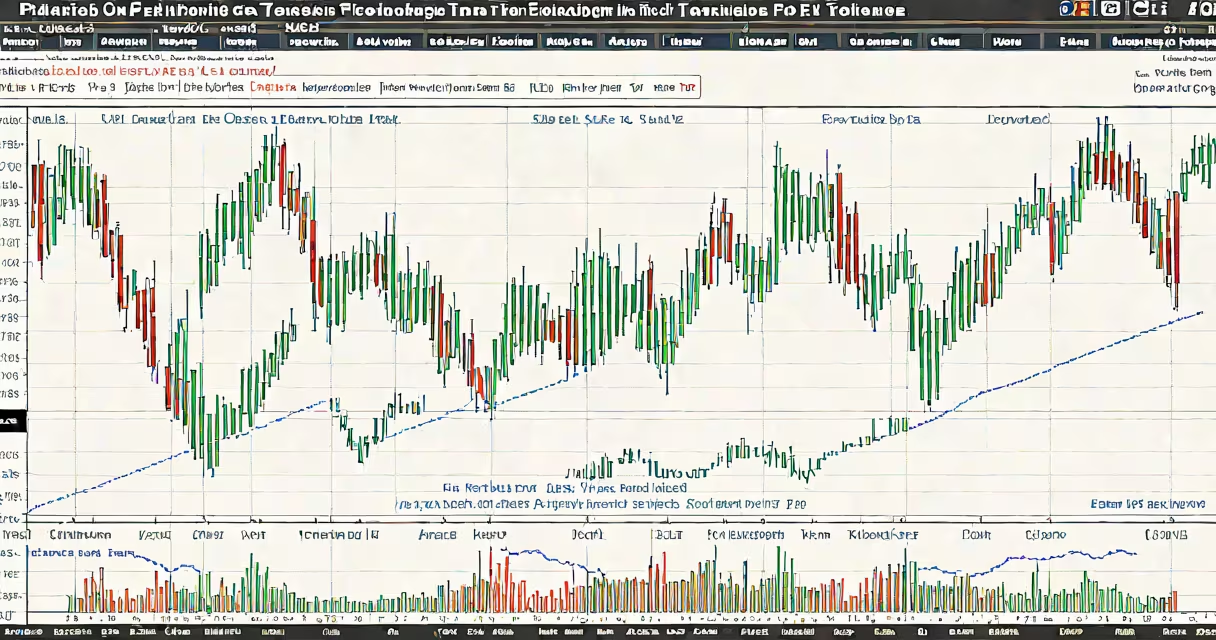
Compared to other small-cap security stocks, PTOI has a higher growth trajectory but greater volatility. Over the past 12 months, its share price fluctuated between $3.10 and $6.80, compared to a 10% average move for the S&P 500. Investors should assess whether they can tolerate this level of risk.
Understanding PTOI stock begins with recognizing it as a specialized player in a growing field. Its value lies not in broad market appeal but in solving specific, high-stakes problems where speed and accuracy matter. As governments and institutions prioritize proactive safety measures, Patriot One's niche becomes increasingly relevant.