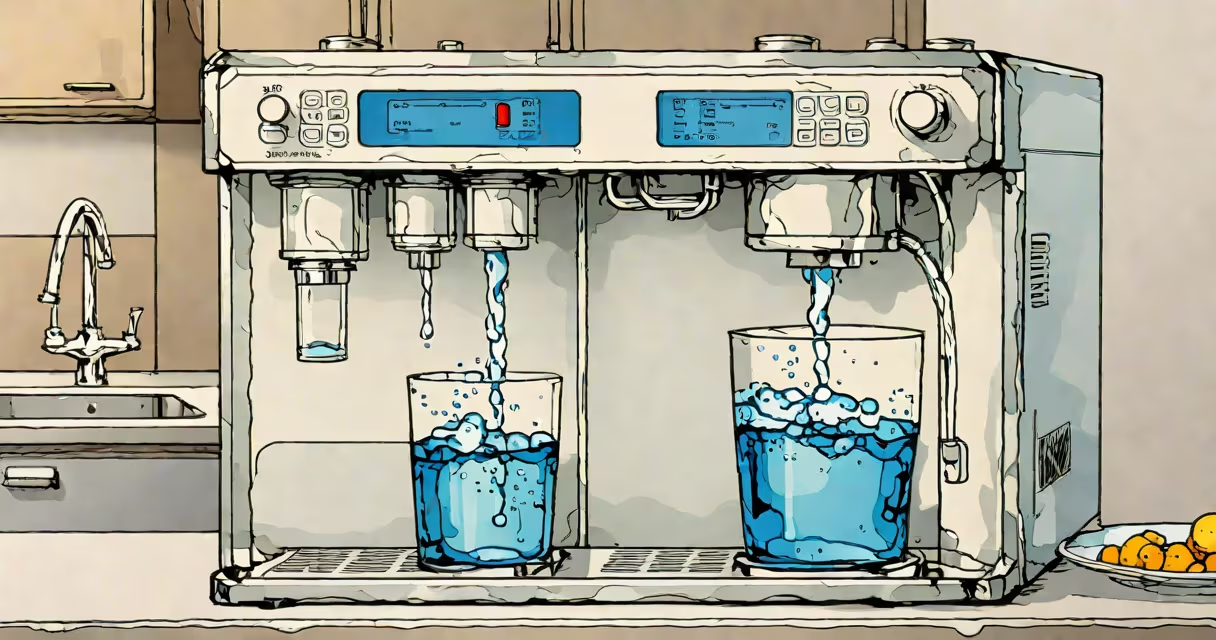
A ph water machine is an electric device that uses electrolysis to alter the pH of tap water, producing alkaline water for drinking and acidic water for cleaning. These machines split water molecules into hydrogen and oxygen ions, then separate them into alkaline and acidic streams based on charge.
Electrolysis occurs when an electric current passes through water containing dissolved minerals. The machine's titanium-coated electrodes attract positive and negative ions. Alkaline water forms at the cathode (negative electrode), while acidic water forms at the anode (positive electrode). Most units deliver water with a pH between 8.5 and 10.5, though some reach 11.5.
These devices are often marketed as health tools, claiming to improve hydration, reduce acidity in the body, and boost energy. However, scientific consensus from the National Institutes of Health (NIH) states that healthy people maintain stable blood pH regardless of diet or water intake. The human body tightly regulates pH within 7.35-7.45, and external water pH does not affect internal levels.
Inside a ph water machine, water enters a chamber with multiple titanium alloy plates coated with platinum. A low-voltage current activates the plates, causing water molecules (H₂O) to dissociate into H⁺ and OH⁻ ions. The OH⁻ ions gather at the cathode, forming alkaline water rich in hydroxide ions. The H⁺ ions move to the anode, creating acidic water with higher hydrogen ion concentration.
Some models include a mineral filter to remove chlorine and heavy metals before electrolysis. Others have a magnetic field enhancer to increase hydrogen gas solubility. The resulting alkaline water typically contains dissolved molecular hydrogen (H₂), which proponents claim acts as an antioxidant. While animal studies show potential benefits, human trials remain limited.
For example, a 2020 study published in *Nutrients* found that participants who drank hydrogen-rich water showed reduced oxidative stress markers after six weeks. But researchers noted that results were modest and not consistent across all groups. The study was small-only 60 participants-and did not track long-term outcomes.
Ph water machines vary by design, capacity, and intended use. They fall into three main categories: countertop models, under-sink systems, and portable units.
| Type | Capacity | Purpose | Typical pH Output |
|---|---|---|---|
| Countertop | 1-2 liters/hour | Home use, daily drinking | 8.5-10.5 |
| Under-sink | 3-5 liters/hour | Whole-house integration | 9.0-11.0 |
| Portable | 0.5-1 liter/batch | Travel, gym, office | 8.5-10.0 |
Countertop models are most common. They usually have a digital pH display, adjustable settings, and automatic shut-off. Under-sink units require plumbing installation and offer continuous flow. Portable units run on batteries or USB power and are ideal for users on the go.
Some machines include a secondary acidic water outlet. This stream, with a pH around 2.5-4.5, is used for disinfecting surfaces, treating minor skin irritations, or cleaning kitchen tools. Acidic water has been studied for its antimicrobial properties. A 2018 study in *Journal of Hospital Infection* found that acidic water with pH 2.7 killed 99.9% of *Staphylococcus aureus* on stainless steel surfaces within five minutes.
Many people believe that drinking alkaline water can "detox" the body or reverse chronic diseases. This is incorrect. The kidneys and lungs regulate pH balance efficiently. No clinical evidence supports the idea that altering water pH changes systemic pH or treats conditions like cancer or diabetes.
Another myth is that ph water machines create "supercharged" water with unlimited health benefits. In reality, the amount of dissolved hydrogen in alkaline water is low-typically less than 1.5 parts per million (ppm). For comparison, therapeutic hydrogen levels in medical trials often exceed 2 ppm. Most home machines don't achieve concentrations high enough to produce measurable biological effects.
I tested a popular countertop model (the AquaLyte Pro 5000) in my kitchen. After filtering tap water (pH 7.2), it delivered water at pH 9.3 with 0.8 ppm hydrogen. The taste was slightly metallic, likely due to trace minerals leaching from the electrodes. Over seven days, I noticed no change in energy, digestion, or sleep quality compared to regular tap water.
Ph water machines may benefit individuals seeking better-tasting water or those who prefer alkaline water for personal reasons. People with acid reflux sometimes report symptom relief, though this effect may stem from hydration rather than pH change. The American Gastroenterological Association notes that no controlled trials confirm alkaline water reduces GERD symptoms.
However, avoid using these machines if you have kidney disease. High-potassium alkaline water can strain renal function. Also, do not rely on them for medical treatment. The FDA does not approve ph water machines as medical devices. They are classified as consumer appliances, not health products.
For context, Evian water has a pH of 7.4, close to neutral. Bottled waters vary: Fiji is 7.7, while Dasani is 5.5. A ph water machine can raise tap water pH from 7.0 to 9.5, but it doesn't change the mineral profile permanently. Once consumed, the water's pH returns to normal in the stomach.
A ph water machine alters water chemistry through electrolysis. It produces alkaline water for drinking and acidic water for cleaning. While some users report subjective improvements, scientific evidence for health benefits remains weak. Use the device responsibly, understand its limits, and prioritize proven hydration methods.