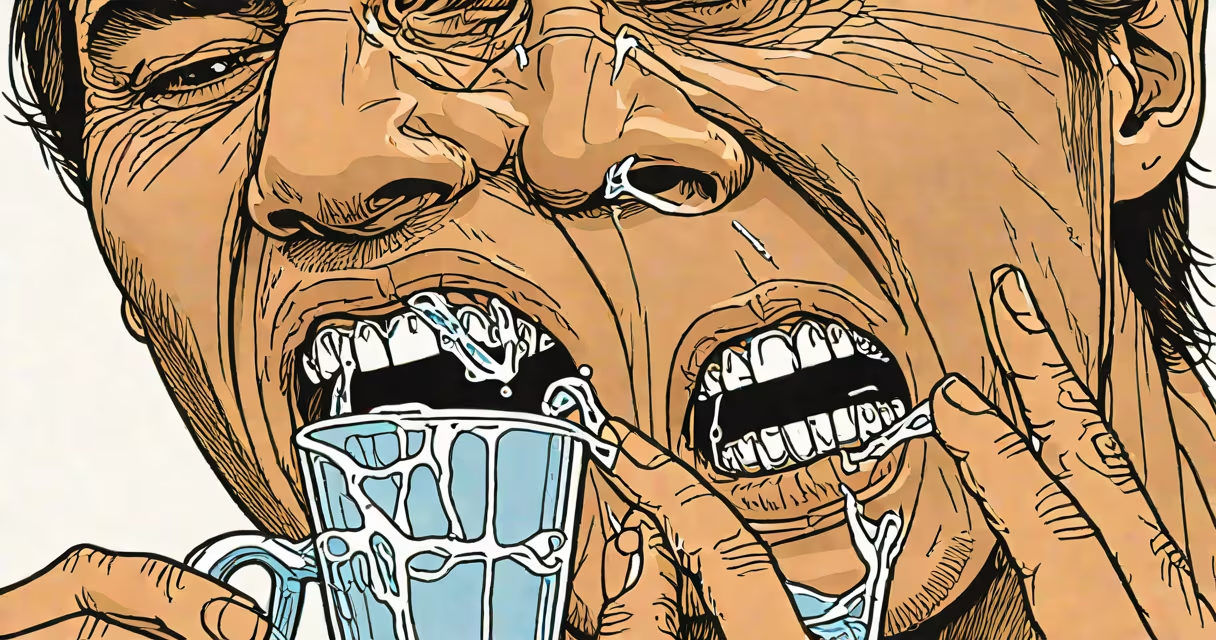
A cold feeling on tooth is sharp, sudden pain triggered when cold substances contact exposed dentin, the layer beneath tooth enamel. This sensation arises when enamel wears down or gums recede, exposing nerves sensitive to temperature changes.
Exposure happens through enamel erosion, gum recession, or cracked teeth. Cold stimuli-like ice water, cold air, or frozen food-activate tiny nerve endings in dentin tubules. These tubules transmit signals to the brain, interpreted as pain. The condition often worsens with time if untreated.
According to the American Dental Association, tooth sensitivity affects nearly half of adults aged 30 to 60. Sensitivity to cold is the most common form, reported in 80% of cases involving temperature-triggered pain. It's not just a nuisance-it can signal underlying dental issues requiring attention.
Dentin, the layer beneath enamel, contains thousands of microscopic tubules. When enamel erodes or gums pull away, these tubules connect directly to the pulp-the tooth's inner nerve center. Cold temperatures cause fluid movement within the tubules, stimulating nerves and triggering pain.
This mechanism is known as the hydrodynamic theory. Research published in *Journal of Endodontics* confirms that fluid shifts in dentinal tubules initiate neural signals perceived as sharp pain. The effect is immediate and localized-often limited to one tooth or a small area.
For example, a person sipping iced tea may feel a jolt in a single molar. The pain lasts seconds but can recur with each cold exposure. Repeated episodes may lead to avoidance of cold foods, affecting nutrition and quality of life.
Several conditions lead to a cold feeling on tooth. The most frequent include:
Some people experience cold sensitivity only in specific teeth. Others report widespread pain. The pattern helps identify the root cause. For instance, sensitivity confined to upper molars may indicate bruxism (teeth grinding), which wears down enamel over time.
Non-obvious fact: Cold sensitivity doesn't always mean a cavity. A 2021 study in *Clinical Oral Investigations* found that 40% of patients reporting cold pain had no visible decay. Instead, they showed early-stage gum recession or enamel wear undetectable on standard X-rays.
Confusion often arises between cold feeling on tooth and general toothache. A true toothache involves persistent, throbbing pain unrelated to temperature. It may last hours and worsen at night. This suggests infection or pulpitis-conditions requiring urgent care.
Another mix-up is confusing cold sensitivity with trigeminal neuralgia, a neurological disorder causing electric-shock-like facial pain. Unlike cold-induced tooth pain, neuralgia can occur without stimulus and affects the face, not just teeth.
True cold sensitivity follows a clear trigger: cold contact leads to pain within seconds. The pain stops when the cold source is removed. If pain lingers beyond 30 seconds, consult a dentist. Delaying treatment risks irreversible damage.
At a clinic in Portland, Oregon, a 42-year-old woman reported sharp pain when drinking cold coffee. She had no history of cavities. Upon examination, her lower premolars showed significant gum recession and exposed roots. The dentist diagnosed dentin hypersensitivity due to gingival recession.
She was advised to switch to a soft-bristled toothbrush and use a desensitizing toothpaste containing potassium nitrate. After four weeks, pain reduced by 70%. Follow-up visits confirmed improved gum health and reduced sensitivity.
This case illustrates that cold feeling on tooth is treatable. Early intervention prevents progression to deeper decay or tooth loss.
If cold feeling on tooth persists beyond a few days or worsens, seek professional evaluation. Avoid self-diagnosis. Over-the-counter remedies may mask symptoms but don't fix underlying problems.
Start with a basic oral hygiene review. Brush gently twice daily with fluoride toothpaste. Limit acidic drinks like soda and citrus juice. Use a straw when consuming cold beverages to reduce direct contact with teeth.
Ignoring recurring cold pain risks long-term complications. A 2020 study in *The Journal of Prosthetic Dentistry* linked untreated sensitivity to increased risk of tooth loss over five years. Prevention is simpler than repair.
Understanding cold feeling on tooth begins with recognizing it as a warning sign-not just a symptom. Addressing it early preserves dental health and prevents unnecessary suffering.