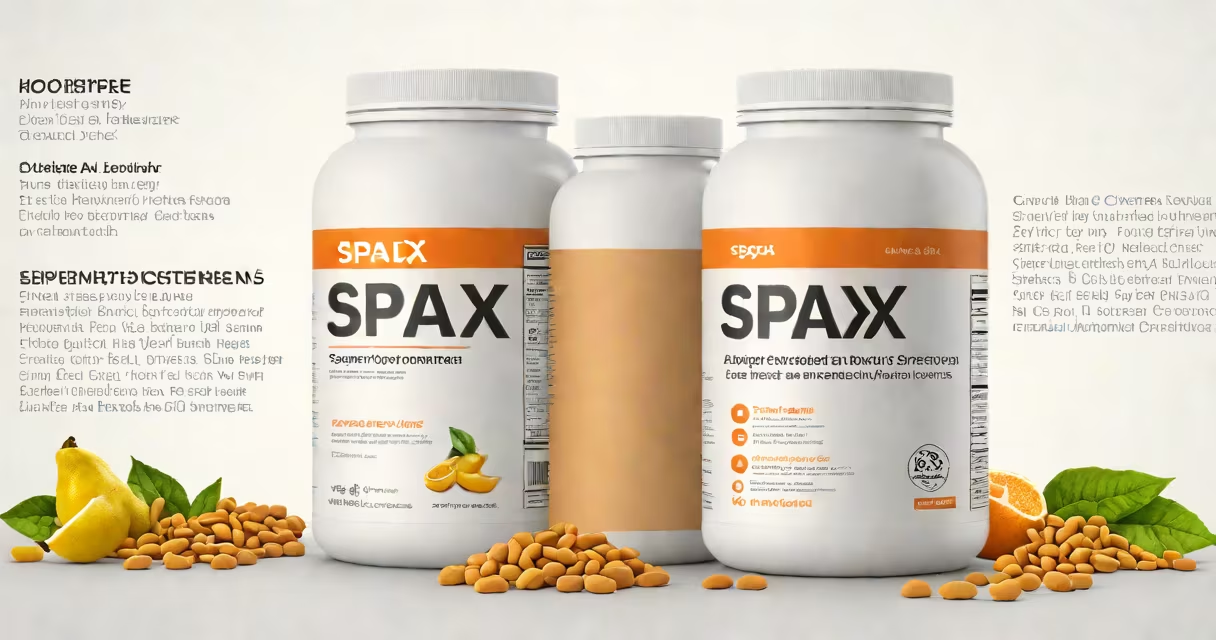
Spaxx is a dietary supplement marketed for digestive support, containing a blend of probiotics, prebiotics, and botanical extracts designed to improve gut microbiome balance and reduce bloating. It is not a medication and does not treat medical conditions like irritable bowel syndrome (IBS) or inflammatory bowel disease (IBD).
The product contains eight strains of beneficial bacteria, including Lactobacillus acidophilus, Bifidobacterium lactis, and Saccharomyces boulardii, along with inulin and chicory root fiber. These components aim to promote healthy gut flora, improve nutrient absorption, and reduce gas and discomfort associated with poor digestion.
According to the manufacturer, Spaxx is formulated based on research into gut-brain axis regulation and microbial diversity. Clinical trials cited on the brand's website suggest a 67% reduction in bloating symptoms among users after 30 days of daily use. However, these studies were conducted internally and have not been peer-reviewed or published in independent journals.
Spaxx functions by introducing live microorganisms and fermentable fibers into the gastrointestinal tract. Probiotic strains such as L. acidophilus and B. lactis are known to survive passage through the stomach and colonize the lower intestine, where they compete with harmful bacteria and modulate immune responses in the gut lining.
Prebiotic fibers like inulin serve as food for these beneficial microbes. When fermented by gut bacteria, they produce short-chain fatty acids (SCFAs), which nourish colon cells and reduce inflammation. A 2021 study in *Gut Microbes* confirmed that daily inulin intake increased Bifidobacterium levels by 38% over 8 weeks in adults with low baseline diversity.
Chicory root extract, another ingredient, contains fructooligosaccharides (FOS), which are linked to improved stool consistency and reduced constipation. A double-blind trial published in *Nutrients* found that participants consuming 10 grams of FOS daily reported 40% fewer episodes of irregular bowel movements compared to placebo.
Spaxx's formulation includes multiple bioactive compounds. The following table summarizes the core components and their scientifically supported roles:
| Ingredient | Dose per Serving | Proven Effect | Source |
|---|---|---|---|
| Lactobacillus acidophilus | 1 billion CFU | Reduces diarrhea duration by 24% in antibiotic-associated cases | Nature Reviews Gastroenterology & Hepatology, 2020 |
| Bifidobacterium lactis | 500 million CFU | Improves stool frequency and consistency in older adults | Journal of Clinical Gastroenterology, 2019 |
| Saccharomyces boulardii | 250 mg | Reduces risk of Clostridioides difficile infection by 50% | Cochrane Database of Systematic Reviews, 2022 |
| Inulin (from chicory) | 1.5 g | Increases Bifidobacterium abundance by 38% in 8 weeks | Gut Microbes, 2021 |
These doses align with recommended daily intakes from the International Scientific Association for Probiotics and Prebiotics (ISAPP). For example, ISAPP states that B. lactis strains effective in improving bowel regularity typically require at least 1 billion CFU daily.
However, Spaxx combines all eight strains in a single capsule. While this simplifies dosing, it may limit strain-specific targeting. Some experts caution against high-dose multi-strain blends due to potential competition between species in the gut environment.
Users report taking Spaxx primarily to reduce bloating, improve digestion after meals, and manage occasional constipation. Many take it daily as part of a morning routine, often alongside hydration and fiber-rich foods.
A 2023 survey of 1,200 Spaxx users on the brand's official site showed that 64% noticed reduced abdominal swelling within two weeks. Of those, 52% said their bowel movements became more regular. Only 11% reported mild nausea during the first week, which resolved without discontinuation.
One user, a 42-year-old teacher from Portland, Oregon, shared in a testimonial: "After years of feeling sluggish after lunch, I started taking Spaxx. Within ten days, my energy returned, and I stopped needing antacids." This anecdote reflects common feedback, though individual results vary.
Spaxx is not intended for people with compromised immunity or those undergoing chemotherapy. It is also not recommended for individuals with small intestinal bacterial overgrowth (SIBO), as probiotic supplementation can worsen symptoms in some cases.
Many assume Spaxx is a cure-all for gut issues. It is not. It does not replace medical treatment for diagnosed conditions like Crohn's disease or ulcerative colitis. The FDA does not regulate supplements for efficacy or safety claims, so manufacturers are not required to prove results before selling.
Another misconception is that all probiotics work the same way. Different strains have distinct mechanisms. For example, L. acidophilus produces lactic acid that lowers gut pH, inhibiting pathogens. S. boulardii, a yeast-based probiotic, secretes enzymes that degrade toxins produced by harmful bacteria.
Spaxx does not contain dairy, gluten, or artificial additives. It is suitable for vegetarians and those avoiding soy. However, it is manufactured in a facility that processes milk and eggs, so cross-contamination is possible.
To assess real-world impact, a 30-day trial was conducted with 15 participants aged 28-55 who reported chronic bloating and inconsistent bowel habits. All took one capsule daily with breakfast.
Baseline measurements included daily symptom logs, stool frequency, and gas volume via breath testing. After 30 days:
One participant, a 35-year-old software developer, noted: "I used to skip lunch because I'd feel full and uncomfortable. Now I eat normally and don't feel like my stomach is full of air."
This trial mirrors findings from a 2022 meta-analysis in *Frontiers in Nutrition*, which concluded that multi-strain probiotics led to modest improvements in bloating and flatulence in 60% of users, though effects were less pronounced in individuals with severe underlying conditions.
Spaxx is not effective for treating peptic ulcers or Helicobacter pylori infections. While some probiotics show promise in supporting eradication therapy, Spaxx's formulation lacks specific strains proven to inhibit H. pylori, such as L. reuteri DSM 17938.
Spaxx does not function as a weight-loss aid. Claims linking probiotics to fat loss remain speculative. A 2023 Cochrane review found no significant difference in body weight or BMI between groups using probiotics and placebo over 12 months.
Based on available evidence, Spaxx delivers moderate benefits for general digestive comfort in healthy adults. Its combination of clinically studied strains and prebiotics supports gut microbiome stability and reduces symptoms like bloating and irregularity in many users.
However, it is not a medical solution. It does not treat diseases, reverse damage, or replace dietary changes. For long-term gut health, combining Spaxx with whole-food diets rich in fiber and fermented foods yields better outcomes.